

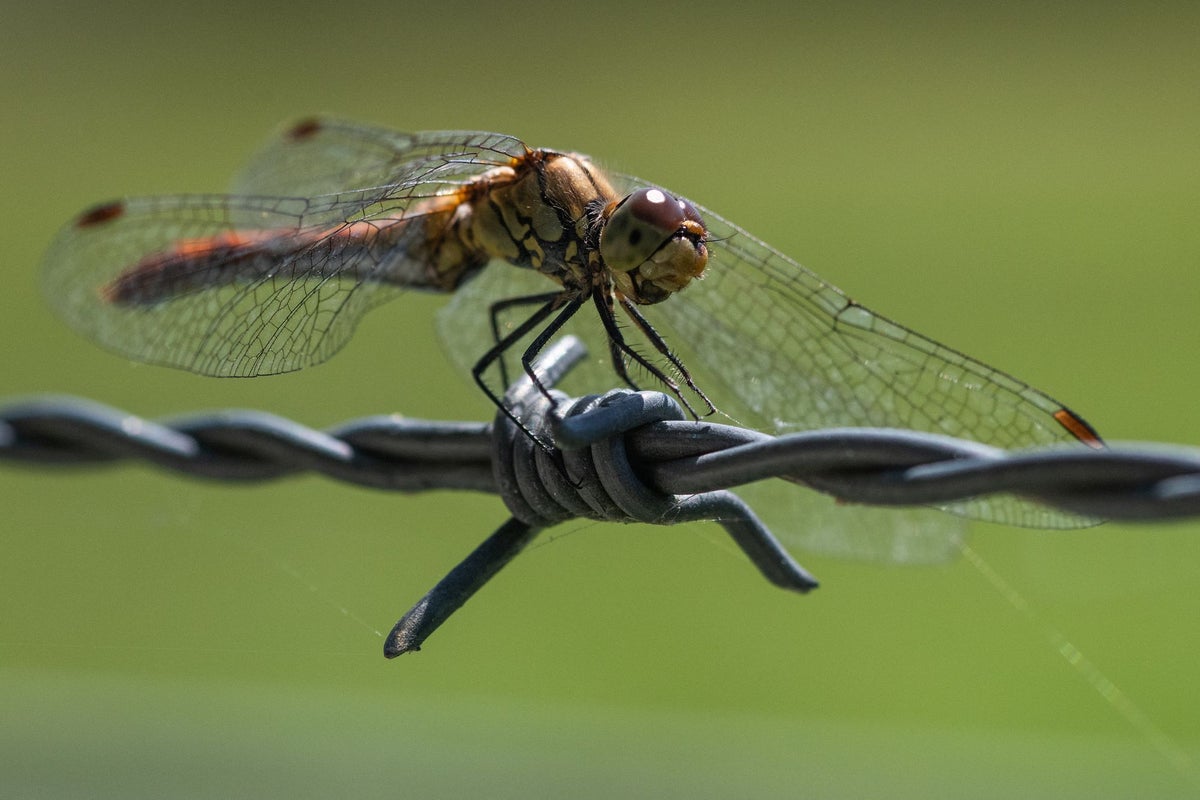
About one-third of India’s known dragonfly and damselfly species could have gone extinct due to rapid urbanisation in recent years, a first-of-its-kind survey reveals amid an alarming decline in global insect populations.
The landmark two-year survey across India’s pristine Western Ghats points to a worrying trend in the region, considered one of the world’s biodiversity hotspots.
Researchers warn that the likely local extinction of dragonfly and damselfly species is particularly alarming, as such species are sensitive to environmental changes, depending on freshwater ecosystems for reproduction.
Their absence in the Western Ghats directly reflects the ecological health of water bodies, scientists say.
In the study, scientists from the Maharashtra Institute of Technology-World Peace University in the western district of Pune conducted rigorous fieldwork between February 2021 and March 2023.
They surveyed odonates in the region, covering a wide range of freshwater habitats, including rivers, streams, waterfalls, ponds, lakes, and dams.
Many of these locations were remote areas, with difficult terrains posing extreme logistical challenges.
Researchers recorded 143 distinct odonate species, including 40 species endemic to the Western Ghats.
The findings, according to researchers, point to multiple, intensifying threats to wildlife across the pristine Western Ghats, including infrastructure development, hydropower projects, severe pollution, and large-scale land-use changes.
Unregulated tourism, recurring forest fires and climate change are also fragmenting and degrading these ecosystems, they say.
Recent studies from the region also point to this trend, revealing a decline of freshwater animals in the area, aggravated by competition from thriving invasive non-native species.
The latest finding also comes amid a trend of rapid global decline in insect populations of about 1–2 per cent annually, with 40 per cent or more of species threatened by extinction.