

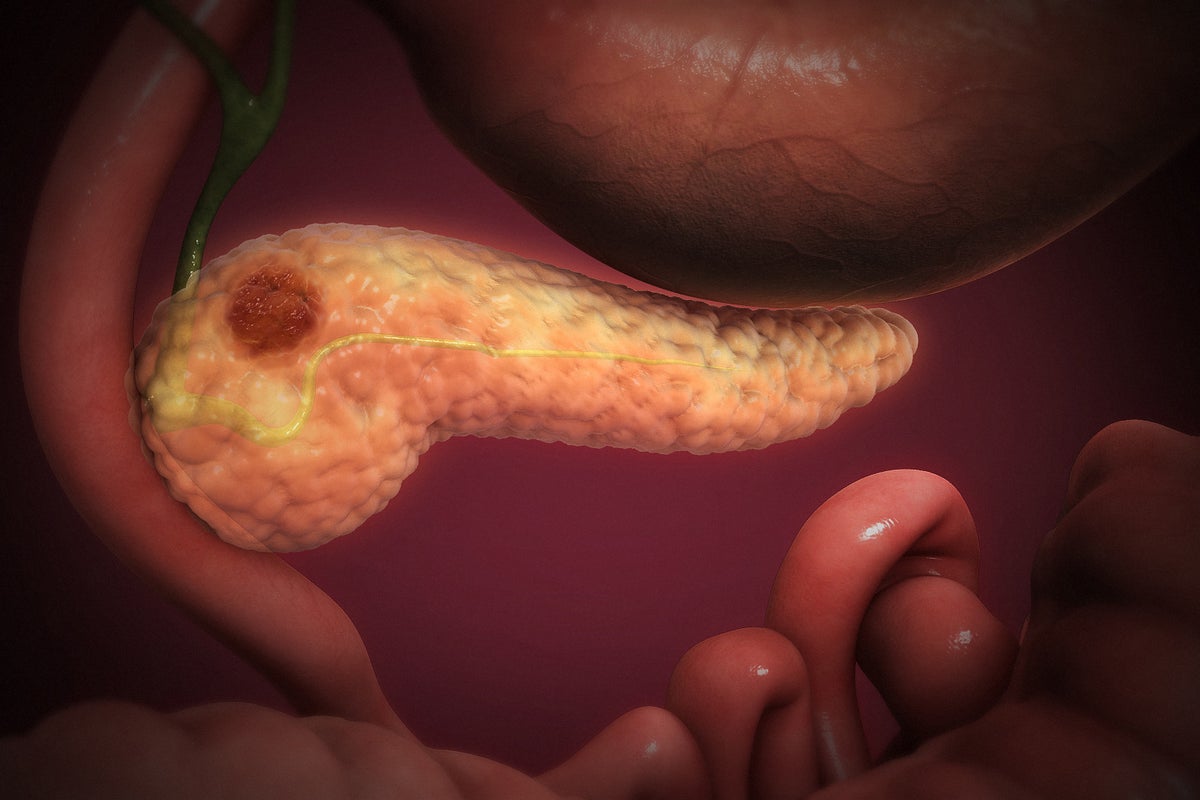
The drug daraxonrasib could be a potential new treatment to double the survival of advanced pancreatic cancer patients, a groundbreaking new clinical trial suggests.
Pancreatic cancer patients often discover the disease after it has already spread and cannot be surgically removed.
This makes chemotherapy the primary treatment option for most patients, with very few surviving beyond one year of diagnosis.
These drugs have been found to “turn off” mutatedRAS genes, frequently found in pancreatic, lung, and colorectal cancers, putting them into a dormant state.
Now, a new early-phase clinical trial shows that the RAS inhibitor therapy daraxonrasib has the potential to improve patient outcomes over current standard treatments for patients with RAS-mutant pancreatic cancer.
In the trial, 38 patients received a daily 300 milligram dose of daraxonrasib.
The patients had pancreatic adenocarcinomas, which are among the most lethal cancers as they are not usually diagnosed until advanced stages.
Their overall survival rate after taking daraxonrasib increased to 15.6 months, compared to standard chemotherapy, which typically improves survival for only up to 6.7 months.
“This trial provides a really strong signal that this targeted therapy has the potential to extend the overall survival of these patients,” said David Hong, an author of the study published in the New England Journal of Medicine.
“The drug controlled people's cancer longer than what we have historically seen with chemotherapy as second line therapy, but we await results,” Dr Wolpin said.
“Although much work remains to be done, it genuinely feels like a new day is dawning for pancreatic cancer treatment, with daraxonrasib potentially serving as the first of a set of new medicines that broadly target mutant RAS,” he concluded.