

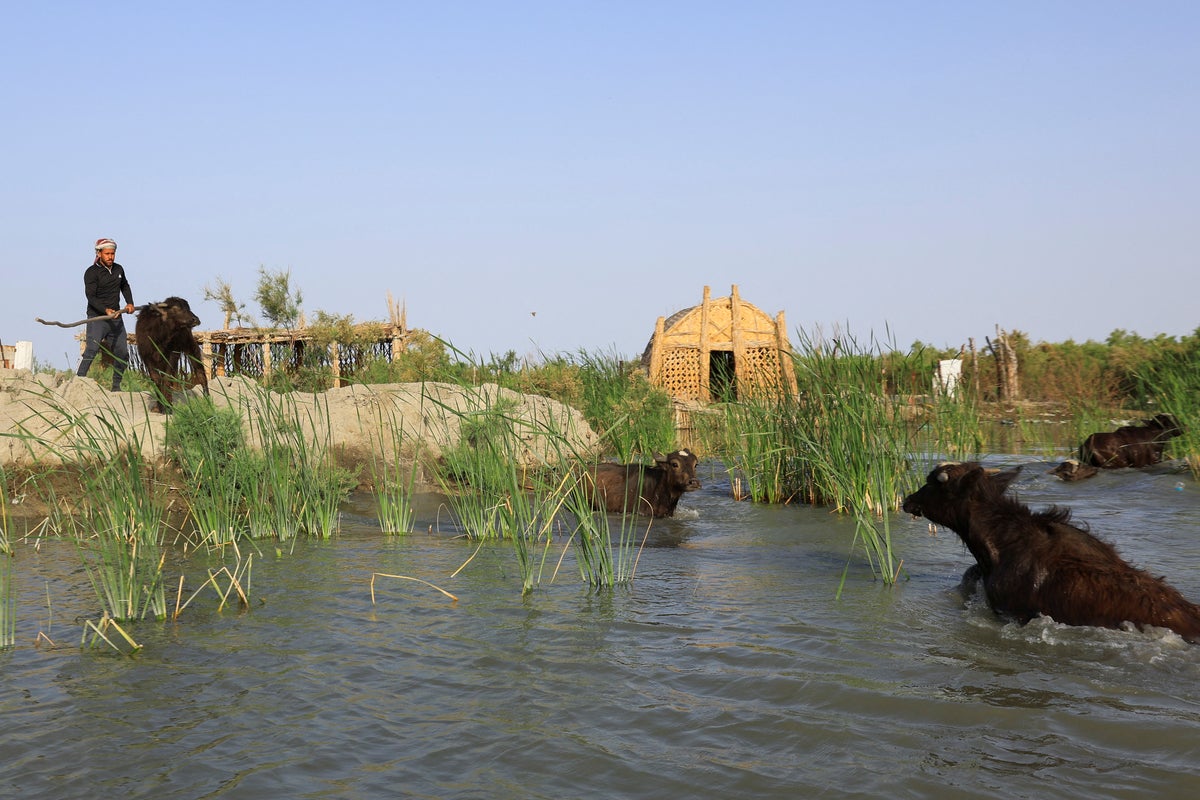
Iraq's historic marshes, left cracked and empty by years of drought, are now witnessing a remarkable revival as rising water levels draw buffalo herders and fishermen back to once-abandoned areas.
In the southern Chibayish marshes, canoes once again glide through waterways that had recently dried up, while water buffalo wade through restored marshland and patches of green pasture have reappeared. Haidar Qassem, a farmer in the central marsh, recounted the devastation: "Some time ago, all our livestock died and there was no water at all." He added: "Many of our people migrated because of the drought," adding that water had returned this year, livestock numbers were recovering, and some families had come back.
This change in the region's fortunes follows heavy winter rainfall that boosted reservoir levels, enabling Iraq’s water resources ministry to release growing volumes into the marshes. Residents are still hoping for further water releases.
Al-Assadi said the proportion of submerged marshland had risen to between 32% and 36%, compared with no more than 8% over the past five years, a view Iraqi water resources officials confirmed.
The higher water levels were also supporting a gradual recovery in biodiversity, including fish stocks, vegetation growth and reeds used by residents to build traditional homes.
The marshes have been inhabited for thousands of years by the Marsh Arabs, whose livelihoods and traditions are closely tied to the water.
Mazin Wadai, a water resources official, said larger inflows, improved water management and stronger seasonal rainfall had boosted reserves in dams and increased flows in the Tigris and Euphrates, allowing more water to reach the marshes.
The water resources ministry said Iraq's strategic reserves have increased by about 6 billion cubic metres this year, giving authorities greater flexibility to manage supplies during the summer months.
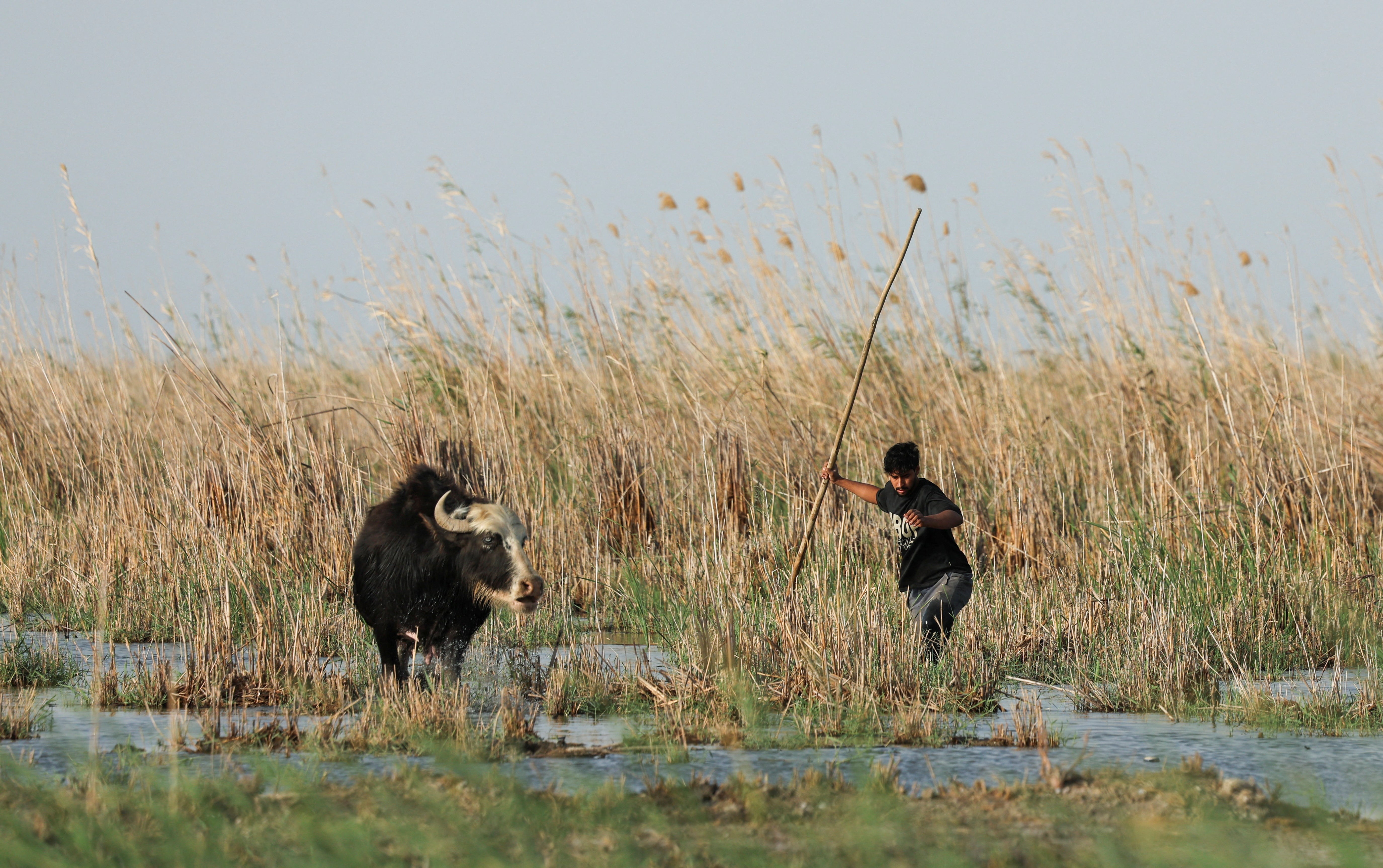
Iraq's marshes, once stretching across more than 3,600 square miles (9,500 sq km), were heavily drained in the 1990s by Saddam Hussein, who accused the Marsh Arabs of treachery during a 1980–1988 war with Iran, in a bid to root out insurgents.
For residents like buffalo herder Raheem Abdul Zahra, the recent improvements have transformed daily life.
"The land was dry, but now it's alive again," he said.