

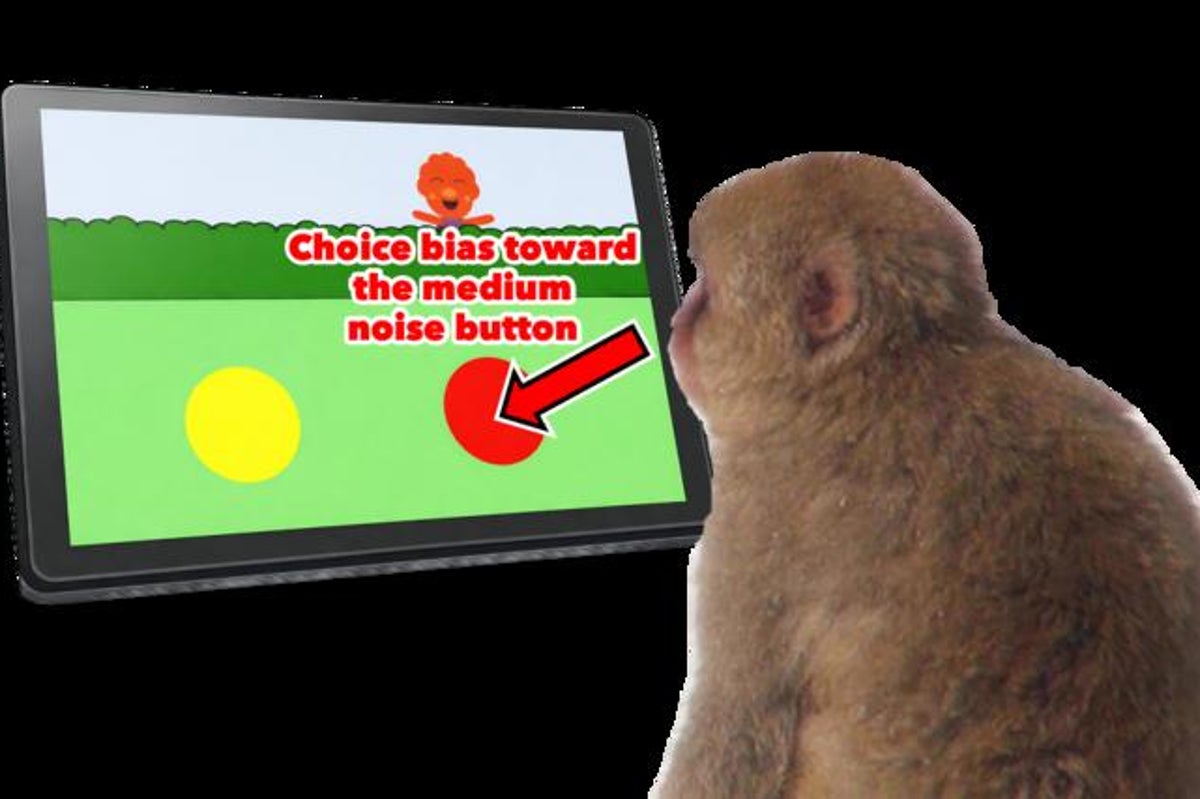
Monkeys voluntarily spent long periods playing a touchscreen video game for a new study, driven purely by curiosity without any food reward, leaving scientists stumped.
The findings, according to researchers, can lead to a better understanding of how curiosity drives animal behaviour.
Curiosity operates independent of extrinsic rewards like food or mating opportunities and drives animals to explore their environments.
This is called the "Goldilocks principle” and also characterises human curiosity.
However, very few studies have explored this impulse in animals.
Scientists from Japan’s Kyoto University assessed how curiosity works in monkeys by exposing them to a touchscreen video game.
In recent years, video games have emerged as tools to help train cognitive abilities and improve the quality of life for humans.
Studies have also explored whether video games can spark the engagement of animals in laboratories and zoos, and potentially help improve their welfare.
"I originally studied play behaviour in wild monkeys, so I have long wanted to create situations in the laboratory where monkeys' play behaviour could emerge naturally,” explained Sakumi Iki, an author of the study published in the journal iScience.
In future studies, researchers hope to apply the findings to develop more games that attract the monkeys' curiosity.
They hope to identify the neural and cognitive mechanisms behind curiosity to gain a “more comprehensive understanding of this phenomenon”.