

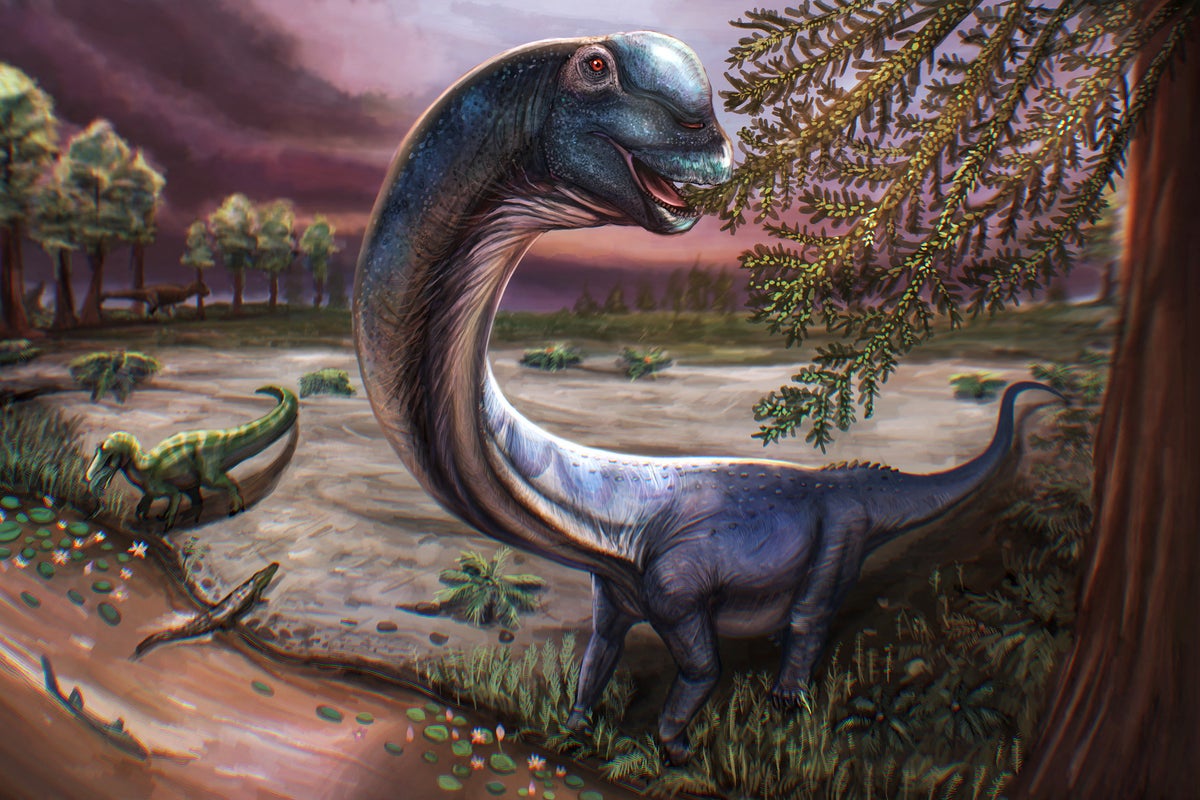
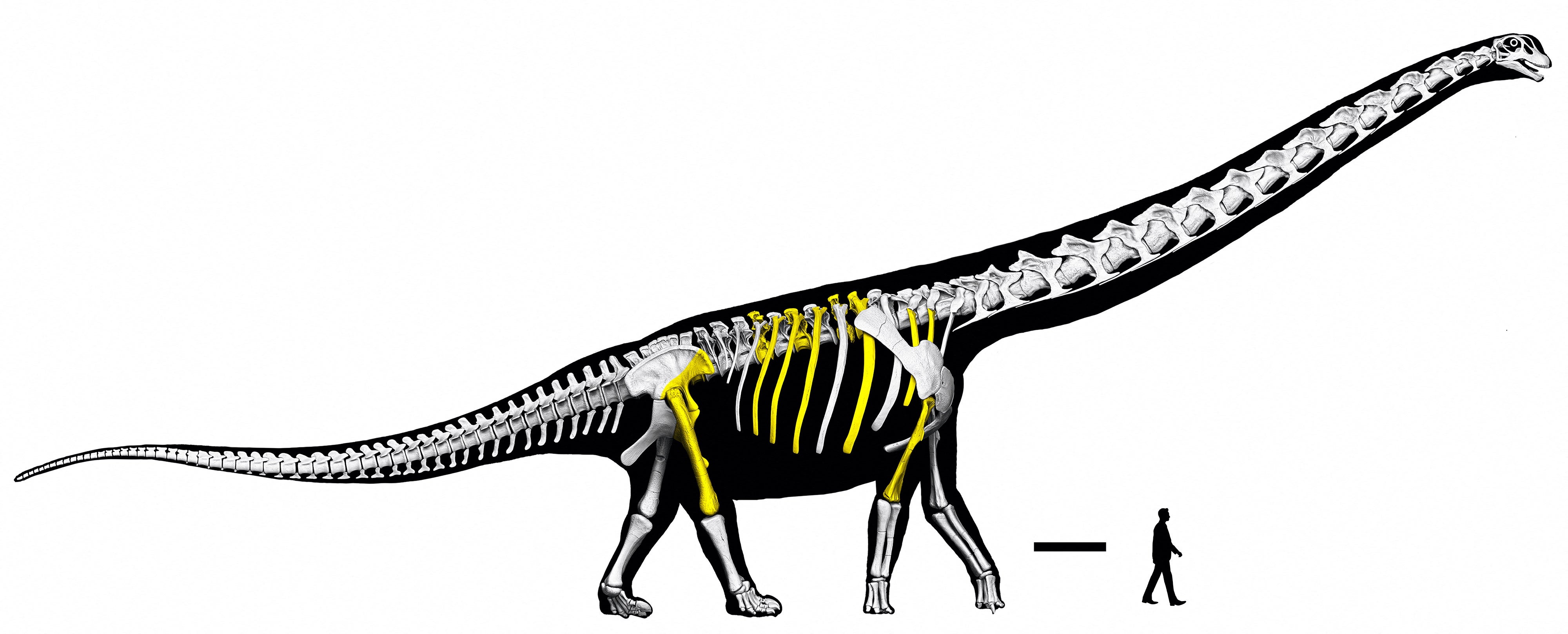
A colossal plant-eating dinosaur, measuring nearly 90 feet (27 meters) long, once roamed the warm, arid landscapes of what is now Thailand approximately 113 million years ago.
This newly identified behemoth, named Nagatitan chaiyaphumensis, represents the largest-known dinosaur discovered in Southeast Asia.
Researchers have unearthed significant skeletal remains of Nagatitan, a member of the sauropod lineage characterized by their distinctive long necks, lengthy tails, small heads, and four columnar legs.
Based on the dimensions of its humerus and femur, the corresponding hind leg bone, researchers estimate Nagatitan's body mass to have been between 25 and 28 tons.
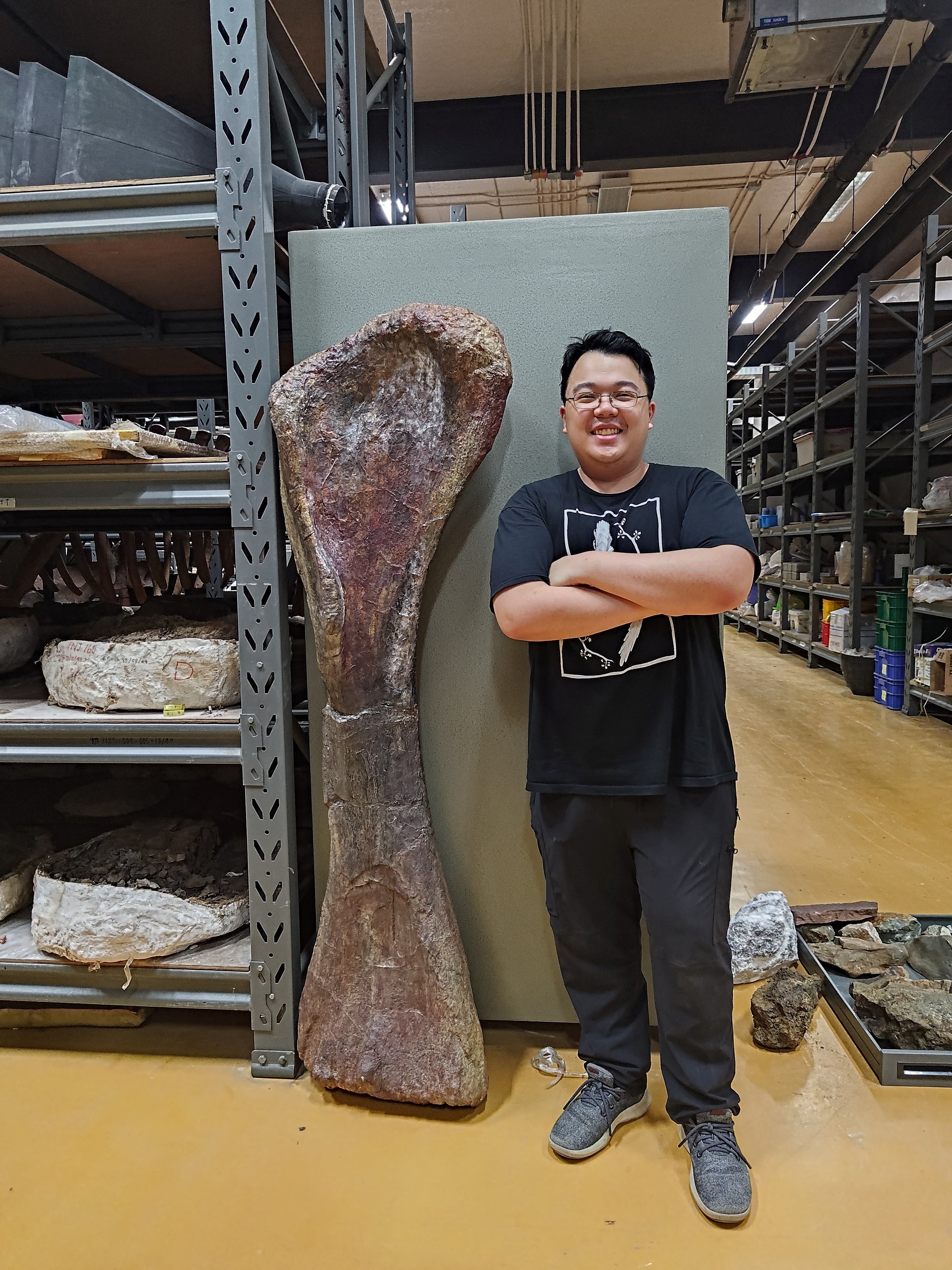
While its head and teeth were not recovered, its feeding habits are inferred from other sauropods.
"Nagatitan was probably a bulk browser that focused on consuming high volumes of vegetation that required little to no chewing such as conifers and possibly seed ferns," explained Thitiwoot Sethapanichsakul, a University College London doctoral student in palaeontology and lead author of the research published in Scientific Reports.
The ancient climate was likely subtropical, featuring forests alongside savanna-like and shrubland habitats. Nagatitan shared its environment with diverse other dinosaurs, flying reptiles known as pterosaurs, and rivers teeming with crocodiles and fish, including freshwater sharks.
Despite the presence of predators, Nagatitan's immense size offered significant protection. The ecosystem's largest carnivore, a relative of the giant African meat-eating dinosaur Carcharodontosaurus, was likely around 26 feet (8 meters) long and weighed about 3.5 tons.
"At that size, it was dwarfed by Nagatitan. At full size, Nagatitan likely had very little to fear in terms of predation," Sethapanichsakul noted.
Predators typically avoided healthy adult sauropods due to the risk of being crushed, instead targeting the old, sick, or vulnerable young.
Nagatitan lived during a period of rising atmospheric carbon dioxide levels and high global temperatures. "Sauropods seem to have become particularly large at this time, with gigantic forms living in South America, China, probably North Africa, and now with Nagatitan a fairly large one in Southeast Asia," Upchurch explained.
"This possible relationship between large body size and high climatic temperatures is not fully understood, but it's likely that the high temperatures had an impact on the plant fodder that was important to sauropods, which were very large-bodied herbivores. Nagatitan gives a glimpse of the period leading up to the eventual peak in body size and temperatures about 10 to 15 million years later."