


A new “happy face” spider species sporting a bright red smile-like print on its back has been discovered in the Himalayas,making it one of the most recognisable arachnids in the world.
Until now, such spiders with smiley shaped patterns where thought to be a unique resident of the Hawaiian Islands and found nowhere else on Earth.
Now, researchers discovered the new spider with the same smile pattern in a mountainous region of India’s northern state of Uttarakhand.
“So, one fine day, when he shared this image from the underside of a Daphniphyllum leaf, I froze in shock because I had seen the Hawaiian spider during my master's programme itself, and I knew instantly we had a jackpot because of its striking resemblance,” said Dr Priyadarshini, a scientist at the Regional Museum of Natural History.
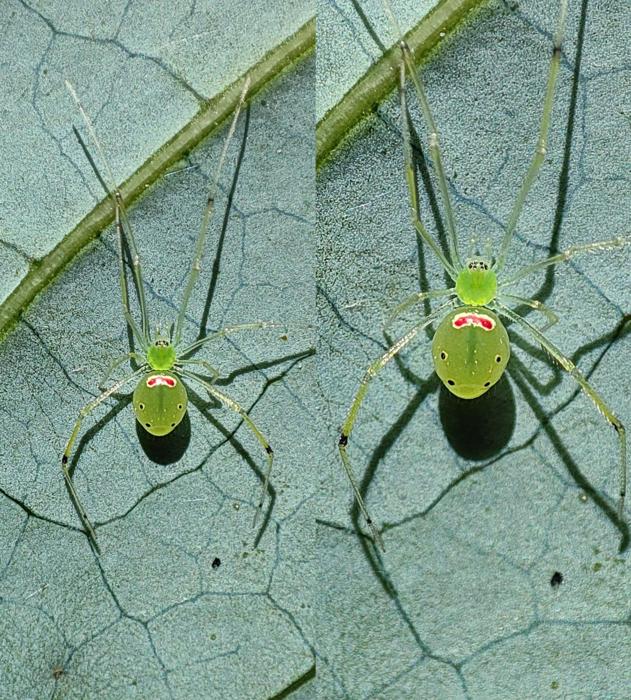
High-altitude spiders live in a different landscape, where the vegetation is varies from those in the plains, scientists say.
“The name Himalayana was decided as the species name because we both wanted to pay our respects to the mighty Himalaya mountain ranges, which have been standing tall not just guarding our country but also holding a plethora of biodiversity within them,” Mr Tripathy, a PhD candidate from the regional Forest Research Institute said.
Overall, scientists identified 32 different colour variations, or “morphs”, of the new species collected from three locations in Uttarakhand: Makku, Tala, and Mandal.
The spider had a genetic variation of approximately 8.5 per cent from the Hawaiian happy-face spider, DNA analysis revealed.
This confirmed that the species belongs to a separate lineage that evolved independently in Asia.
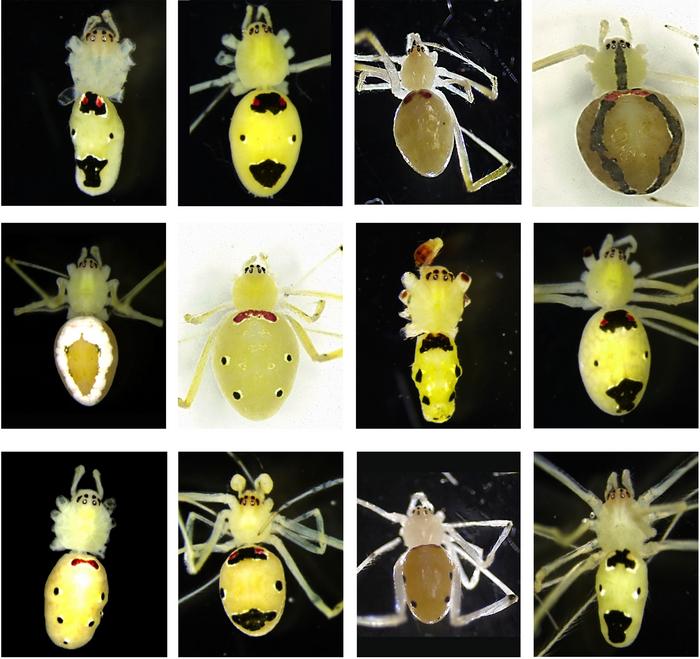
While spiders of the species have an unmissable smiling pattern on their back, its exact purpose remains a mystery, researchers say.
“How did the spiders choose an invasive species and ginger exactly?” Dr Priyadarshini wondered.
“It will be our further scope of work to establish any missing links, if at all,” she added.