

Nasa has unveiled far-reaching plans for its first Moon base that could see people living and working on the lunar surface within six years.
Located at the satellite’s south pole, the outpost, which eventually may have sites spread out over hundreds of square miles, will be established in a phased approach, which builds capability over time.
The pioneering development is designed to help unlock new scientific discoveries and develop the technologies needed for future deep space missions, including to Mars.
The move follows the record-breaking flyby of the Moon by the Artemis II crew in April, which marked a crucial stepping stone towards a future landing.
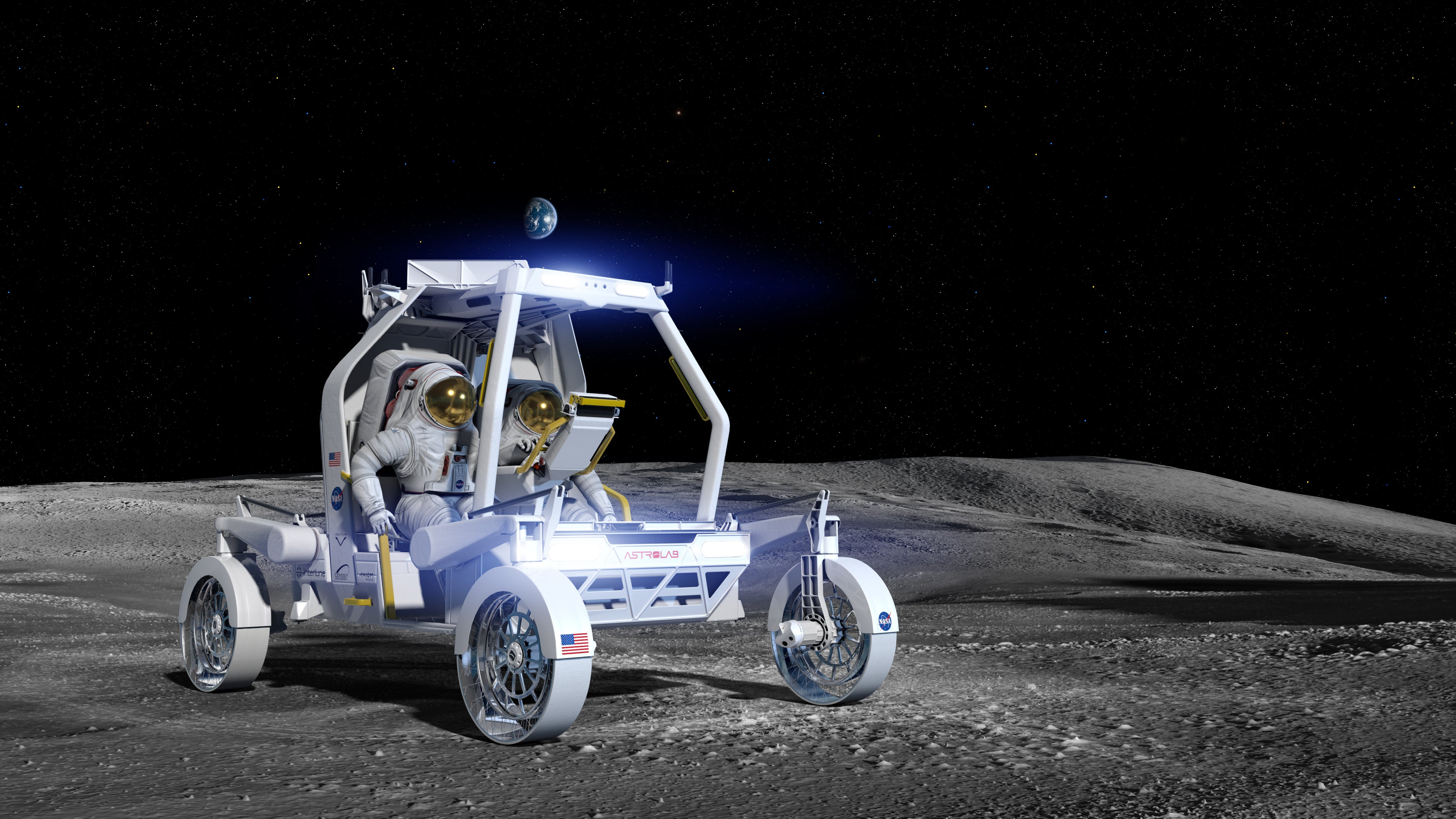
This includes plans to deploy drones to help explore and map the challenging terrain as well as remote and crewed lunar vehicles, designed to carry out tasks in the demanding environment.
It will also provide the opportunity to demonstrate commercial lunar landing capabilities and the delivery of payloads needed for the future development of the base.
Under the proposed blueprint, from 2029 to 2032 it is planned to provide early habitation and create a semi-permanent infrastructure.
This would include testing out technologies that could pave the way for future nuclear power systems for use on the lunar surface.
It would also see the use of pressurised rover vehicles, that would enable astronauts to operate in shirt sleeves for up to 30 days while carrying out experiments.
In the third and final phase from 2032, it is planned to have a continual human presence on the Moon with routine crew rotations.
Speaking later during a Q&A, Mr Isaacman said the aspiration was to eventually have “a lot of outposts” on the lunar surface, and caves had also been looked at to provide shelter for astronauts form the harsh environment.
On the ambitious plans for a base, he added: “There’s certainly going to be a whole lot of inspiration that’s coming out of this for the next generation, but number one, we want to be in an environment where we can learn the skills, so that astronauts can go and plant the stars and stripes on Mars someday.”