

Scientists believe they have established the purpose of hundreds of giant stone jars spread across northern Laos, potentially solving a mystery that has baffled experts for decades.
Hundreds of these jars, some weighing several tons, have been discovered across the remote uplands of northern Laos and they were thought to be hundreds – if not thousands – of years old, but their exact purpose had remained unclear.
Now, a new study suggests they were used in mortuary rituals and contain the bones of multiple generations, acting like an ancient version of a family crypt.
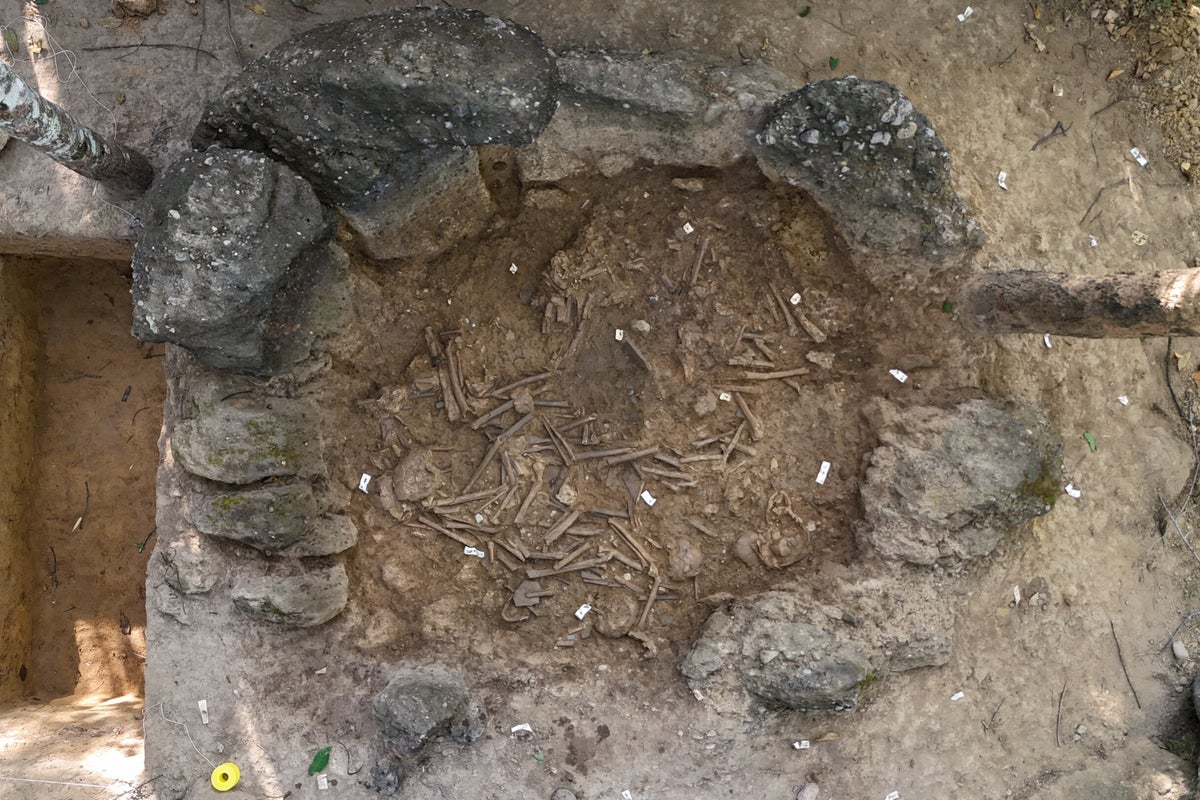
Inside, they uncovered densely packed human bones, consisting of the remains of at least 37 people, shedding more light on the mortuary traditions of early communities in the region.
Scientists estimated that the jar was used over a long period of time, possibly up to 270 years, with multiple phases of use.
“We determined that it was an example of secondary internment during the 9th and 12th centuries AD, in which human remains were deposited after an initial period of decomposition elsewhere,” said archaeologist Nicholas Skopal from James Cook University in Australia.
He said that “the jar looked a bit like a giant stone cauldron that had collapsed in on itself”.
Dr Skopal was quoted as saying by The New York Times: “Honestly, it was one of those rare excavation moments where everyone becomes very quiet. We expected archaeology, but not such a dense, intact concentration of body parts.”
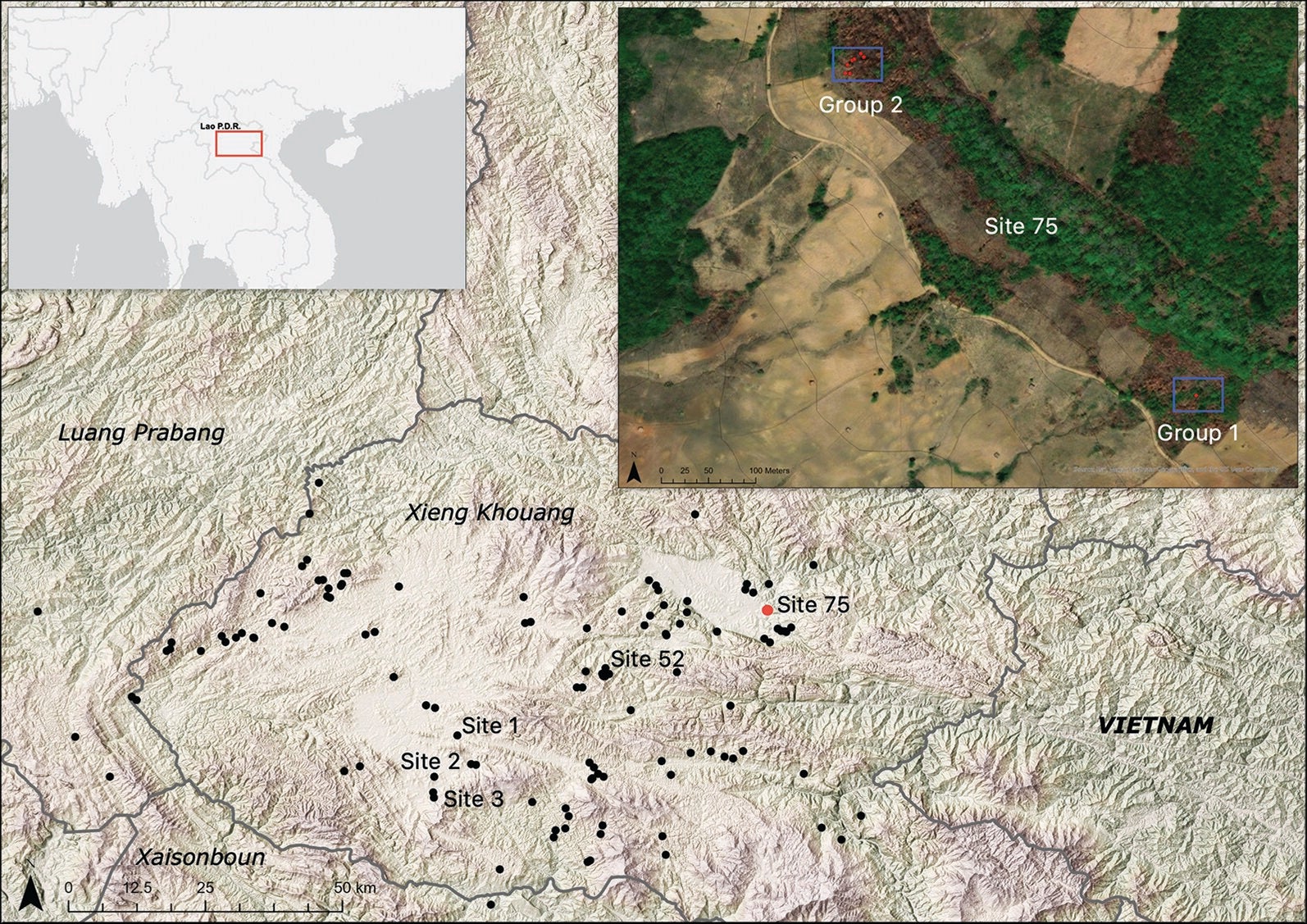
The findings could reshape our understanding of one of Southeast Asia’s most puzzling ancient landscapes, according to the study published in the journal Antiquity.
The findings challenge some earlier assumptions that the jars were intended as final resting places and that they dated to the Southeast Asian Iron Age (500 BC - 500 AD).
The team led by Dr Skopal and Souliya Bounxayhip, an archaeologist with the Lao Department of Heritage, also uncovered a collection of artefacts, including iron tools, earthenware, stone slabs, a copper bell, and glass beads. These Glass beads found inside the jar were chemically analysed and found to have been produced in South India and Mesopotamia. This shows evidence of previously unknown trade connections between Southern and Western Asia and the Laotian highlands.
The jars and their use for burial correspond with a period of increasing trans-Asian connectivity, scientists say.
This was likely facilitated by commercial expansion under several flourishing kingdoms, including China’s Song Dynasty and Cambodia’s Khmer Empire.
“The preservation encountered here offers an exceptional window into past mortuary practices, and indicates that many comparable sites may still exist, awaiting discovery,” Dr Skopal said.
“Continued investigation of these landscapes has the potential to fundamentally transform our understanding of the cultural and social dynamics that shaped the region,” he said.