

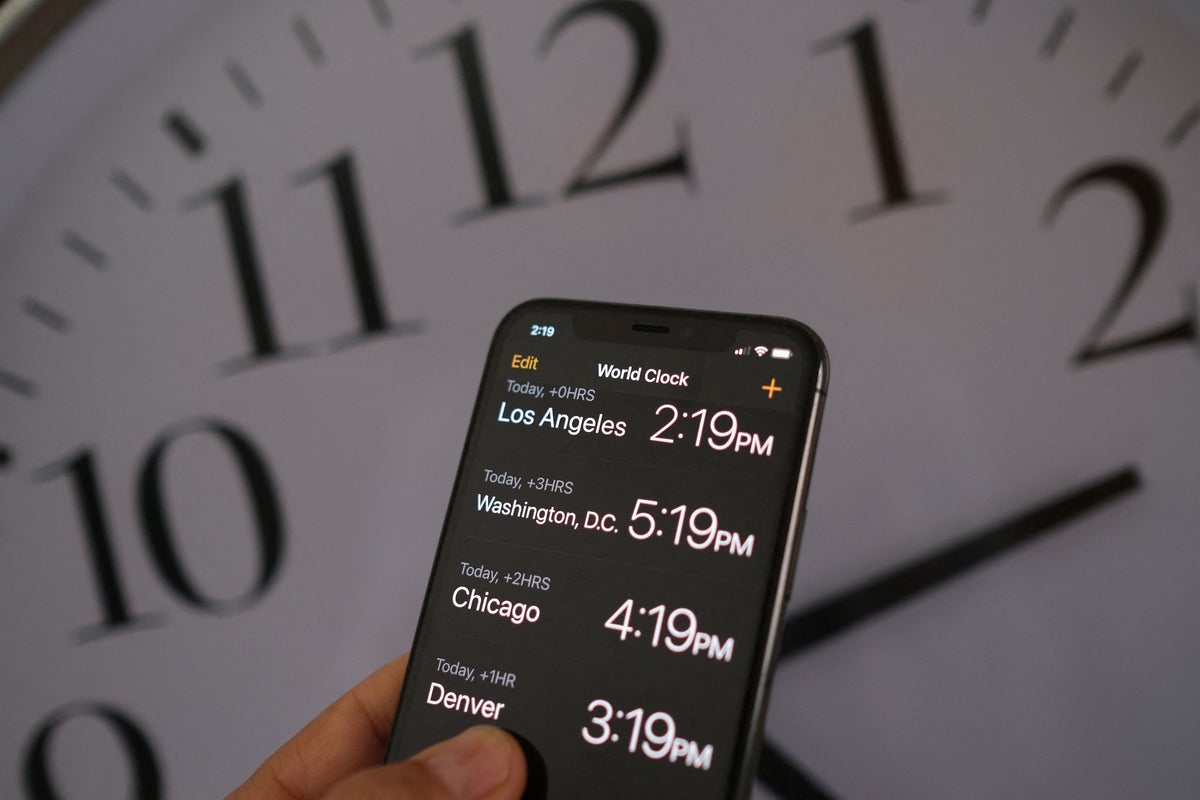
Daylight saving time may pose serious risks to those living with chronic mental illnesses, a major new review of studies has warned.
The seasonal practice of advancing clocks by one hour in the spring and returning them to standard time in autumn was originally implemented to optimise daylight use, and is currently observed in over 70 countries worldwide.
Studies have shown that the biannual clock changes can affect the body’s natural internal clock, or circadian rhythm, with implications for the health and safety of nearly one billion people who follow the practice.
Scientists found that the one-hour time shift caused by daylight saving time acts as a population-wide circadian stressor.
People with depression, bipolar disorder, anxiety disorders, PTSD, ADHD and psychotic disorders face particularly heightened risks during the days and weeks following a clock change, researchers warn in the review, which was published in the journal Brain Sciences.
“We now have evidence that daylight saving time changes disrupt circadian rhythms in ways that are harmful to people with mental health and sleep-related difficulties,” said Elizabeth England-Kennedy, assistant professor of public health at NMSU.
“We change the clocks in a single night, but the brain does not adjust that quickly. Daylight saving time silently disrupts the body’s biological clock, influencing sleep, emotional regulation, cognition, and psychiatric stability,” said Kavita Batra, a study co-author from the University of Nevada, Las Vegas.
The findings come amid growing calls to end DST in the US.
“For millions living with chronic mental illness, this is more than lost sleep; it may represent a preventable public health risk or serious exacerbation of existing symptoms,” Dr Batra said.
“While more than 100 countries have observed daylight saving time sometime in the past, as of now, only about a third of the world follows this ritual, which offers little value to societal or economic well-being,” said Jagdish Khubchandani, another author of the study from NMSU.
“We could potentially continue to lose millions of dollars due to daylight saving time-related workplace injuries, traffic accidents, and health problems like heart attacks and strokes,” Dr Khubchandani said.