

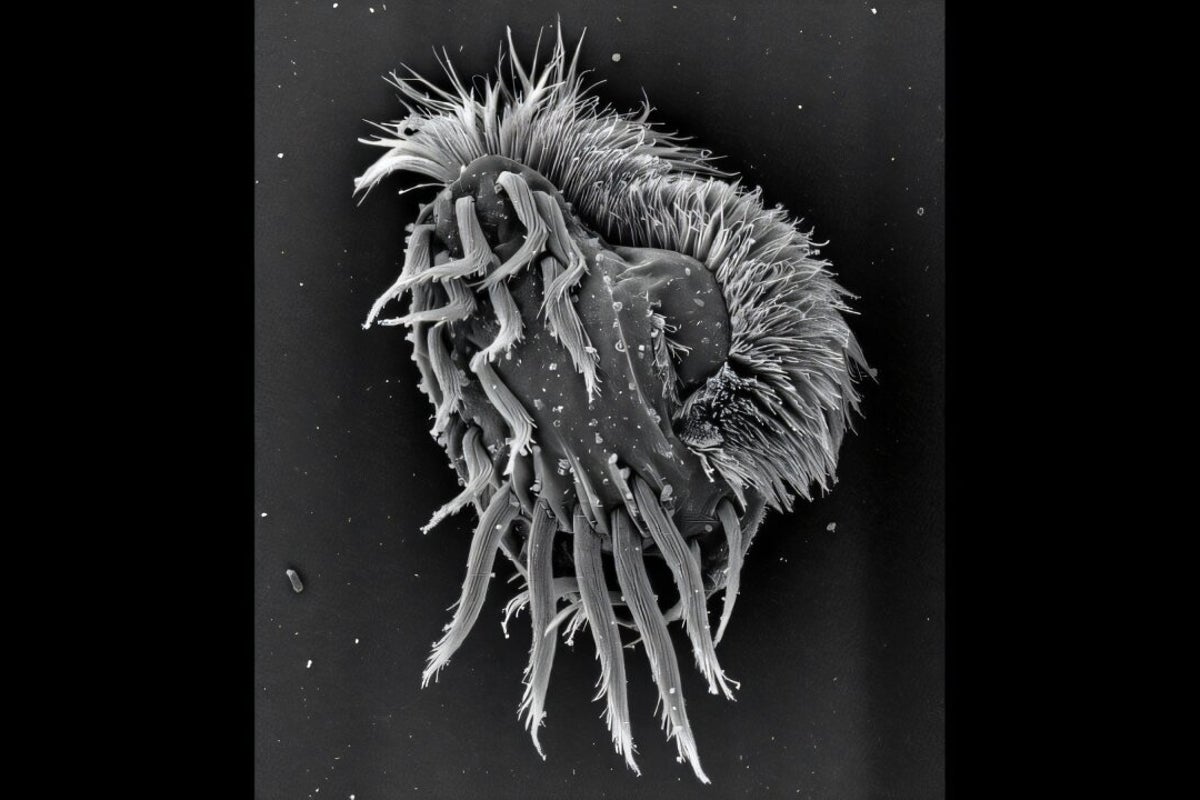
Scientists have documented for the first time a microbe that drastically transforms its size, shape, and behaviour into a cannibalistic "supergiant" that hunts and devours members of its own species.
The findings demonstrate how single-celled organisms are capable of complex behaviours, and could transform how we understand development in such life forms.
Until now, the field of developmental biology has largely been focused on studying multicellular animals and their behaviour over the years.
They spotted that clones of these microbes that live together can spontaneously develop into supergiants more than twice the length of normal cells, with a broader body shape and a larger mouth.
When they normally exist as single cells, they filter-feed on bacteria.
But once they transform into supergiants, they become raptorial predators, running over their clonal relatives to capture and swallow them whole at a rate of roughly one prey every 10 minutes, found the study, published in the journal PNAS.
"This is a single cell doing something we usually associate with the development of animals," said biologist Ben Larson from Rensselaer Polytechnic Institute (RPI).
"It expands our picture of what single-celled organisms are capable of, and gives us a new system for asking questions about how cells control their form and function,” said Dr Larson, a co-author of the PNAS study.
The behaviour change is not just confined to feeding.
As single cells, the protozoan walks across surfaces and swims gracefully along helical trajectories in fluid.
"Most of what we know about development comes from animals," Dr Larson said.
"We now have a system where we can study those same fundamental questions, as analogous developmental processes play out in a single-celled organism on a completely different branch of the tree of life,” the biologist said.