


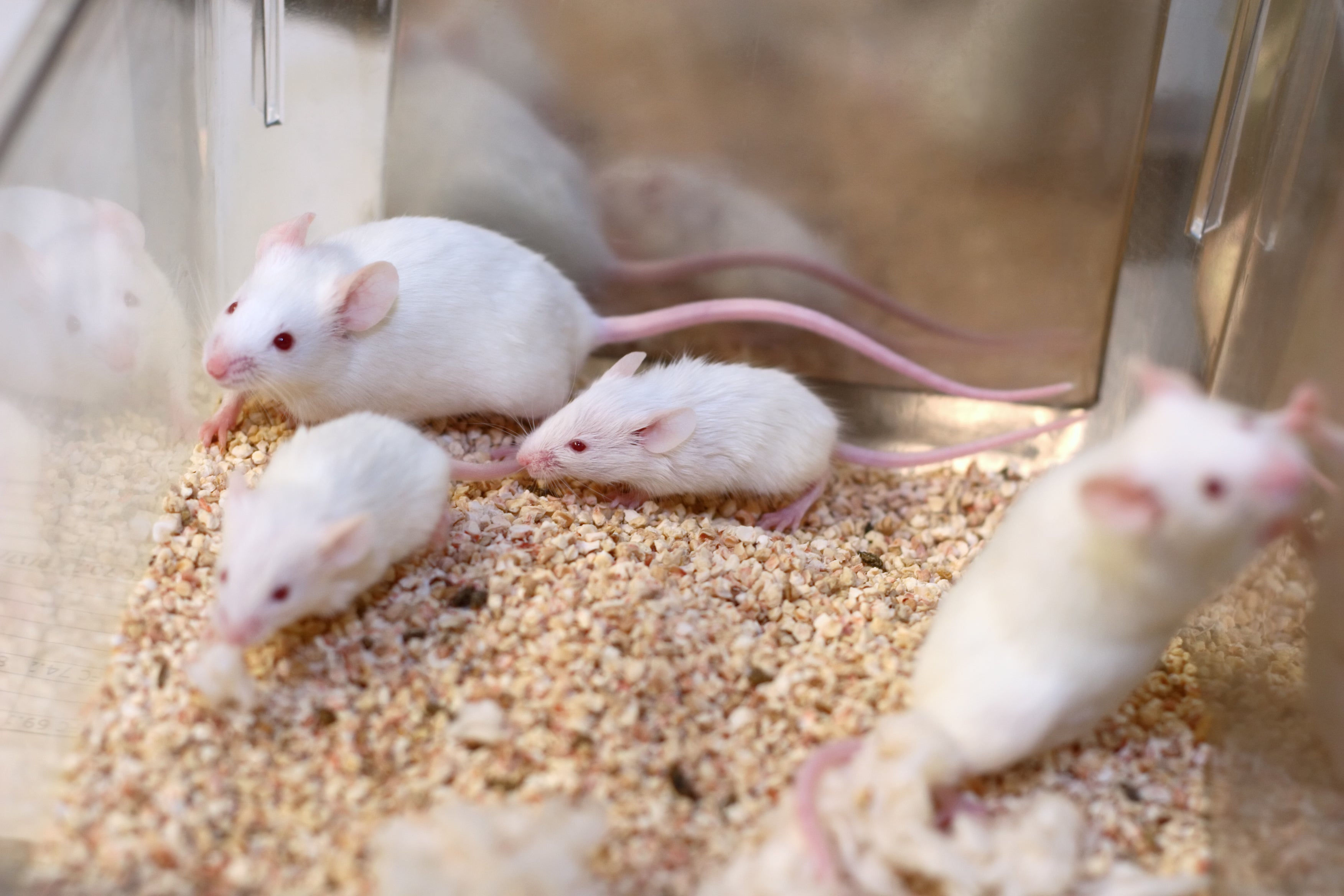
A two-decade study into cloning has revealed a fundamental flaw in the technology, demonstrating that repeated duplication leads to an accumulation of fatal genetic mutations. Researchers in Japan generated 1,206 cloned laboratory mice from a single female donor between 2005 and 2025.
Initially, no outward signs of trouble were observed across the first 25 generations. However, genetic mutations subsequently began to pile up, ultimately proving fatal. The 58th generation of clones, despite appearing physically normal, died within days of birth due to these accumulated genetic mutations.
This extensive research directly contradicts the long-held notion that clones are identical copies of their original donor and disproves the idea that current cloning technology could be sustained indefinitely without adverse effects.
After generating the first clone, the researchers repeated the process every three to four months, cloning each generation from the one preceding it. Like the original donor mouse, all the clones were females with brown fur.
The researchers published preliminary results in 2013 spanning the first 25 generations that found the clones to be healthy, with no apparent negative effects.
"At that time, we concluded that re-cloning could likely continue indefinitely. However, in that study, we did not examine the genetic sequences. We continued our research for 13 more years, and as a result, we discovered that our previous conclusion was incorrect - that is, there is a limit to re-cloning," Wakayama said.
The researchers sequenced the genomes of 10 clones from the various generations to understand what was happening at the genetic level.
They found that serial cloning produced an effect akin to duplicating a picture using a copying machine. With the first copy, the image quality deteriorates slightly. When copying that copied image, the quality deteriorates further. Repeating the process numerous times yields an image very different from the original.
The researchers used a technique called nuclear transfer to generate the clones. The same method was used to produce Dolly the sheep, the first successfully cloned mammal, at a laboratory in Scotland in 1996, and Cumulina, the first successfully cloned mouse, at a lab in Hawaii in 1998.
With nuclear transfer technology, researchers create an embryo by transferring the nucleus, a cell's primary repository of genetic information, from a donor cell into an egg cell whose own nucleus was removed. A specialized ovarian cell, called a cumulus cell, that surrounds and nurtures a developing egg was used in the cloning.
"We had believed that we could create an infinite number of clones. That is why these results are so disappointing. At this point, we have no ideas for overcoming this limitation. I believe we need to develop a new method that fundamentally improves nuclear transfer technology," Wakayama said.
An increase in large-scale harmful mutations began with the 27th generation including chromosomal abnormalities. For instance, one copy of the X chromosome was lost. Chromosomes are threadlike structures that carry genetic information from cell to cell. In mammals, females carry two X chromosomes, one inherited from each biological parent.
"In cloning, all genes are passed on to the next generation, meaning that all defective genes are also passed on," Wakayama said.