

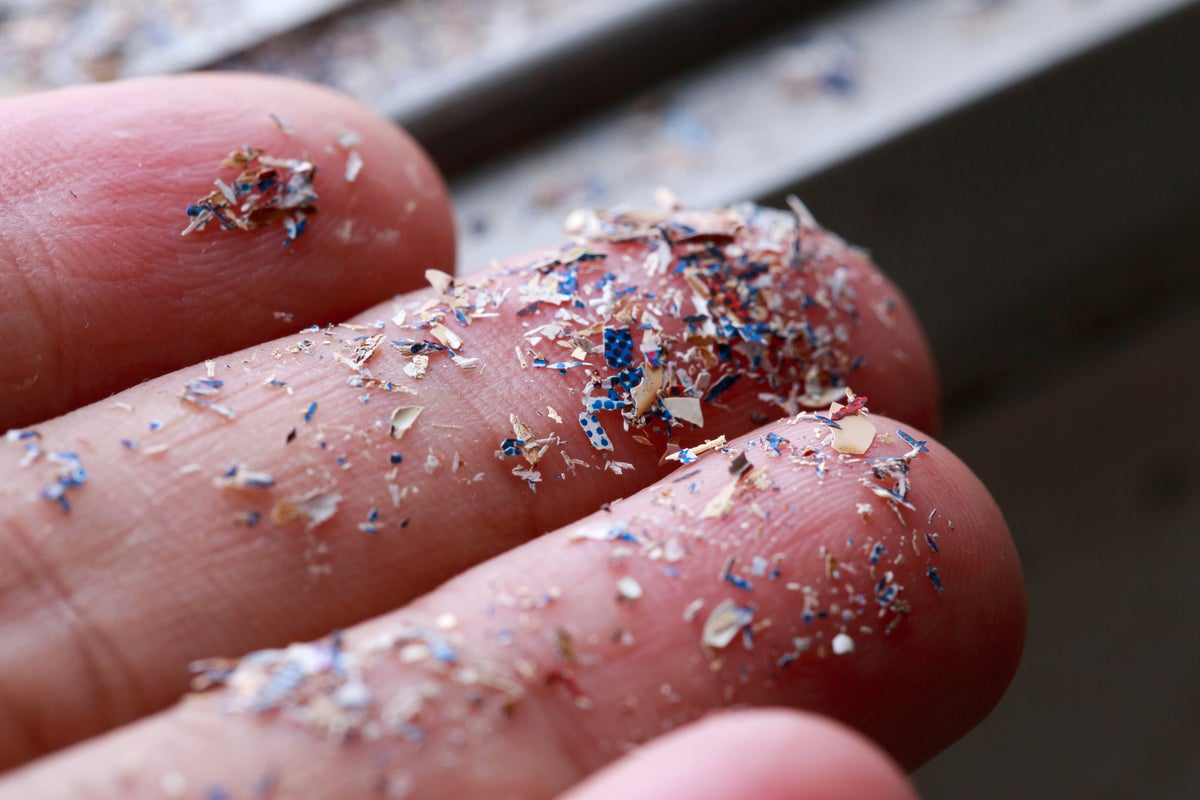
Microplastics used in coffee cups and plastic bags have been detected by scientists using a laser light to map the build-up of the tiny particles in the body.
Plastic particles have been found in fish, ocean trenches, the air we breathe, and our clothes. But detecting just how much of these microplastics end up in the human body was previously only possible through dissection.
Now a breakthrough test uses photoacoustic imaging, where pulses of laser light are directed into tissue and absorbed by microplastics. Tiny high-frequency soundwaves are created when the light is absorbed, allowing scientists to create a detailed map showing where microplastics are located within the body.
“There is growing concern over their effects on human health, which until now has been difficult to study inside living tissue. Most existing methods rely on biopsies or analysis of tissue after dissection, which limits what researchers can observe over time.
“We expect our new approach to detecting microplastics will open up new avenues of research into where these particles accumulate in the body, how long they persist, and whether they contribute to diseases affecting the brain, blood vessels and other organs.”
The study, published in the journal Advanced Science, shows that this non-invasive method can be used to detect microplastics deep in the living tissue of mice.
In the experiment, mice were given about half a milligram of microplastics – the equivalent to half a grain of salt – using an injection. Researchers then tracked how the plastic moved through the body.
As with humans, the animals were also likely to already have low background levels of microplastics from food and drinking water.
Dr Joseph Bear, first author on the study and senior lecturer in inorganic chemistry at Kingston University London, said: "The versatility of the technique allows us to shed light on the behaviour of other plastics in the body.
“Surgical implants such as hernia meshes are a particular focus due to their frequent mechanical failure, side effects, and need for replacement. We are following this up with further research that aims to improve patient outcomes and the safety of these devices.”