

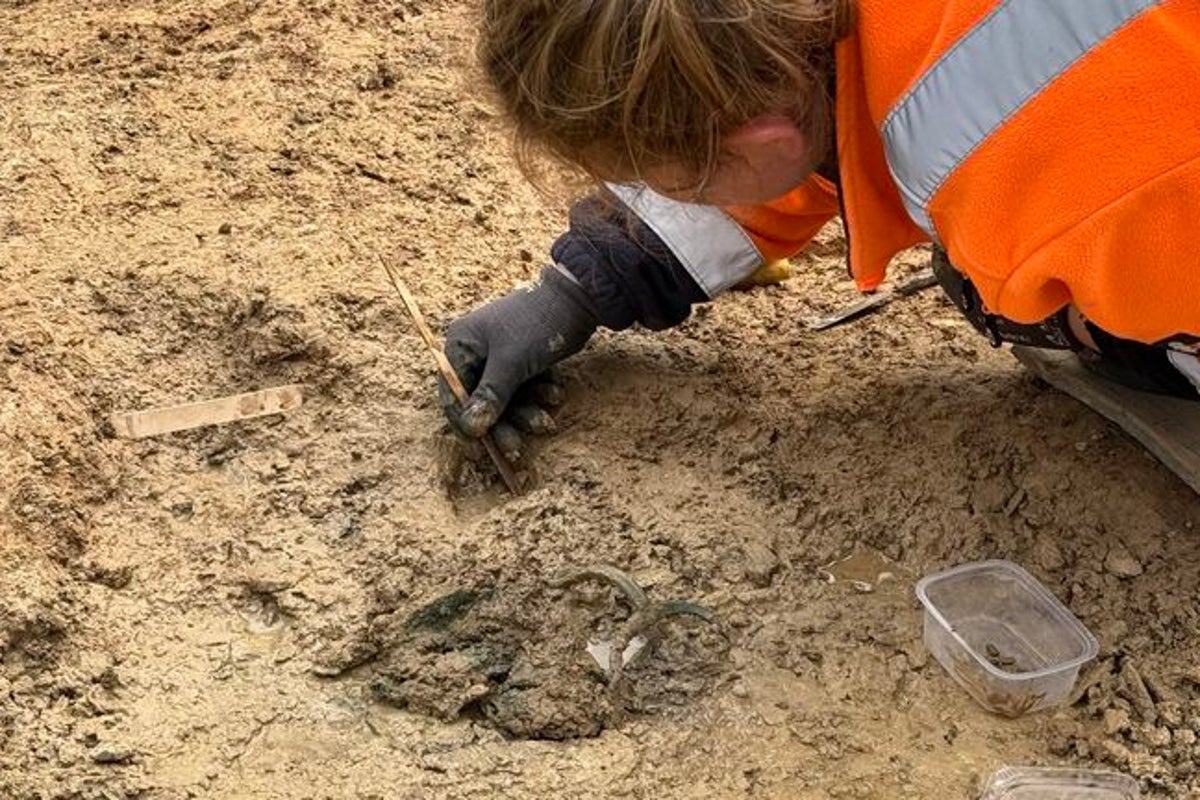
Archaeologists have unearthed the remains of a Celtic warrior who lived 2,400 years ago, along with fragments of his chariot, weapons, and gold at a “princely grave” in Bad Camberg in Germany.
The buried artefacts, including weapons, gold jewellery, and a bronze jug traced to present-day Italy, suggest that the individual belonged to high levels of Germany’s Iron Age Celtic society, say researchers from the Limburg-Weilburg district.
These findings, unravelled during the construction of a solar park near the city, mark the only known presence of a local Celtic elite to date, they say.
The region is long known to have had Celtic cultural presence.
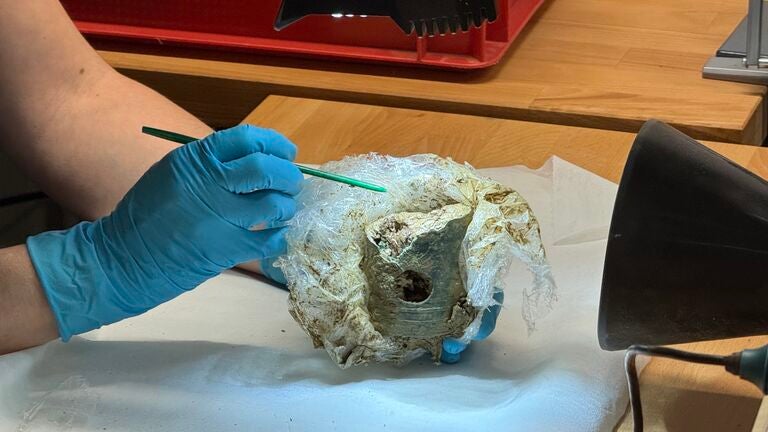
With the latest find, researchers say there are now clear parallels to other well-known Celtic princely tombs in Central Europe.
“The new finding can broaden this picture: It promises new insights into social elites, craftsmanship, supra-regional contacts and burial customs in the recent Iron Age,” scientists say.
Researchers drew comparisons of the elite buried at the grave to the Prince of Glauberg, a prominent Celtic figure who lived in Hesse around this time.
“The comparison to the Celtic prince of Glauberg is obvious with the already known spectrum of finds,” they wrote.

At the site, archaeologists found remnants of a two-wheeled chariot, including hub fittings, axle cap fittings made of non-ferrous metal and iron wheel tire fittings.
“As a contemporary of the Prince of Glauberg, the Prince of Bad Camberg certainly played an important role in the Celtic history of our country,” they said.
Archaeologists are currently excavating other sections of the grave to study any potential objects inside and gain more understanding of the elite Iron Age person.