

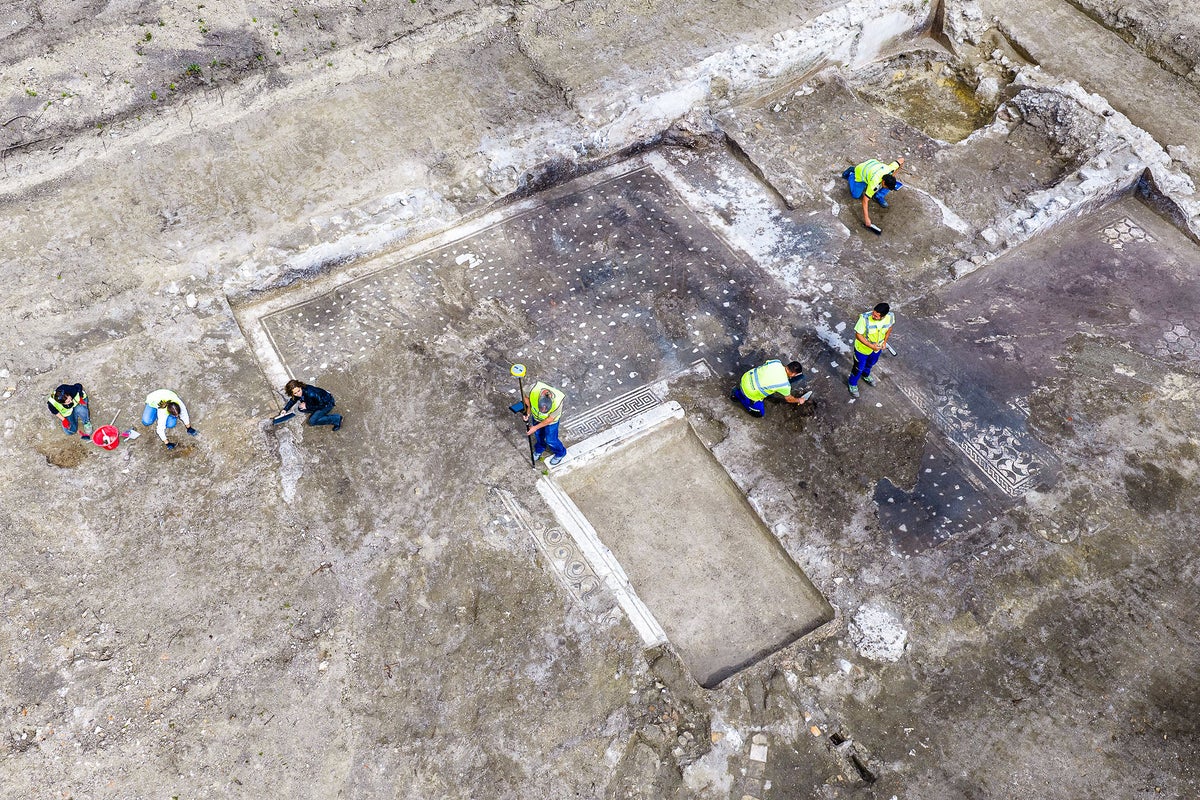
Archaeologists have unearthed a lavish first-century villa visited by three emperors in the Castel di Guido region on the outskirts of Rome, shedding new light on the life of elite Romans of the time.
The villa was discovered during digs about 19km (12miles) west of the city walls of Rome in the ancient region of Lorium, where previously a property linked to emperor Antoninus Pius was found.
It came to light after local police were alerted to illegal excavations at government-owned land in the region.
“The discovery of the Roman villa in Castel di Guido demonstrates the exceptional archaeological richness of our city even outside the historic centre,” said Daniela Porro, the Special Superintendent of Rome under Italy's Ministry of Culture.
It also shows the effectiveness of a protection based on cooperation and promptness to intervene, Mr Porro said.
Excavations at the site brought to light very well preserved walls up to 1.5m high, mosaics and painted plasters.
Researchers could identify the atrium of the villa, characterised by a central sunken pool and refined decorations with geometric and plant motifs.
One of the excavated rooms had nine black-and-white geometric panels, and another had black octagons on a white background, and a third room had black rectangle motifs.
Historical records suggest that the paternal and maternal families of Antoninus Pius, who reigned from 138AD to 161AD, lived in Lorium.
Overall, the villa opens up new perspectives for understanding the Roman empire in the first century, scientists say.