

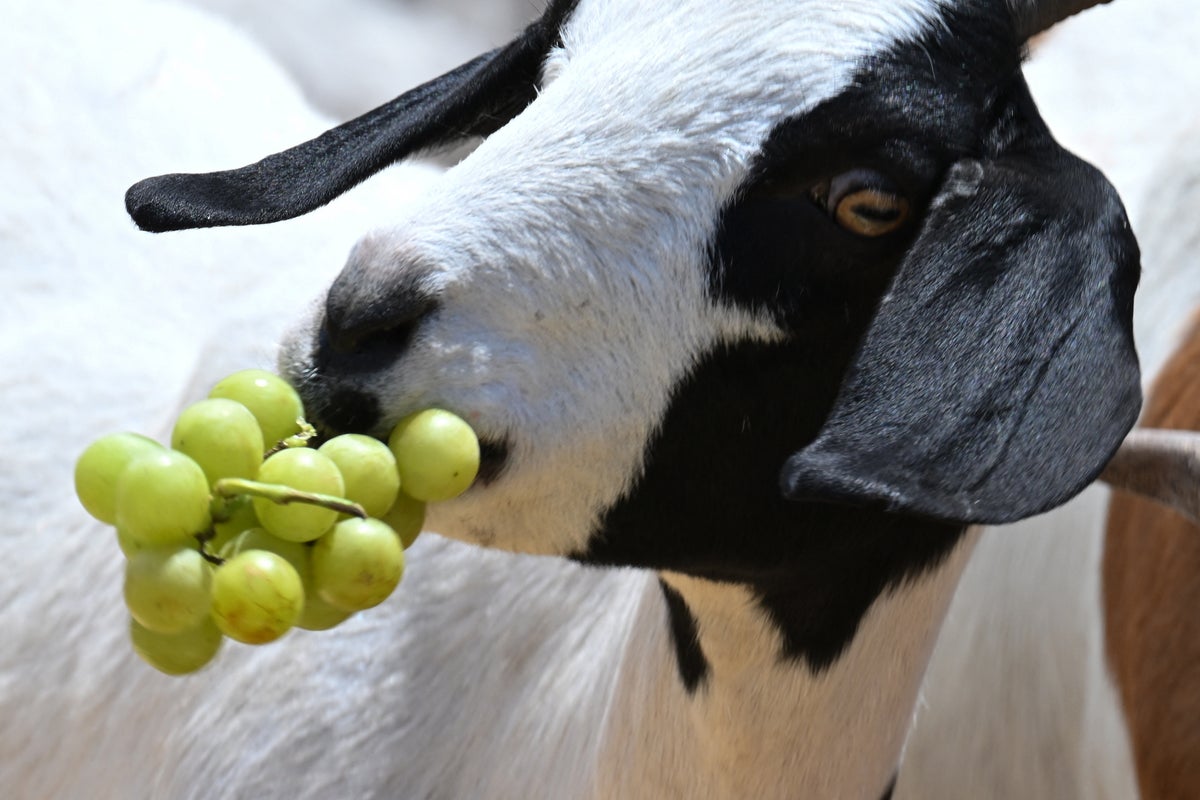
Domestic goats can follow the direction of an unseen human’s voice to seek out hidden food, a new study has found.
Research from the University of Zürich suggests that goats could have the same impressive sensitivity to social and communicative cues as dogs.
The animals were able to identify hidden food with the help of a human voice around 60 per cent of the time, similar to dogs, which have a 63 per cent success rate.
Researchers wanted to investigate how goats, one of the oldest domesticated species, would respond to human voices.
Using 29 goats to conduct the tests, they placed two buckets on either side of a wooden screen and put dried pasta in one of the buckets while the goat was not looking.
One of the researchers then hid behind the screen and either called the goat excitedly in the direction of the bucket with pasta in it, said nothing, or spoke excitedly away from both buckets.
Researchers then released the goat to see what bucket they would choose.
Around 60 per cent of goats chose the bucket with food when the researcher spoke excitedly in the direction of the bucket.
This is compared to 63 per cent of dogs, and 80 per cent of one-year-old humans.
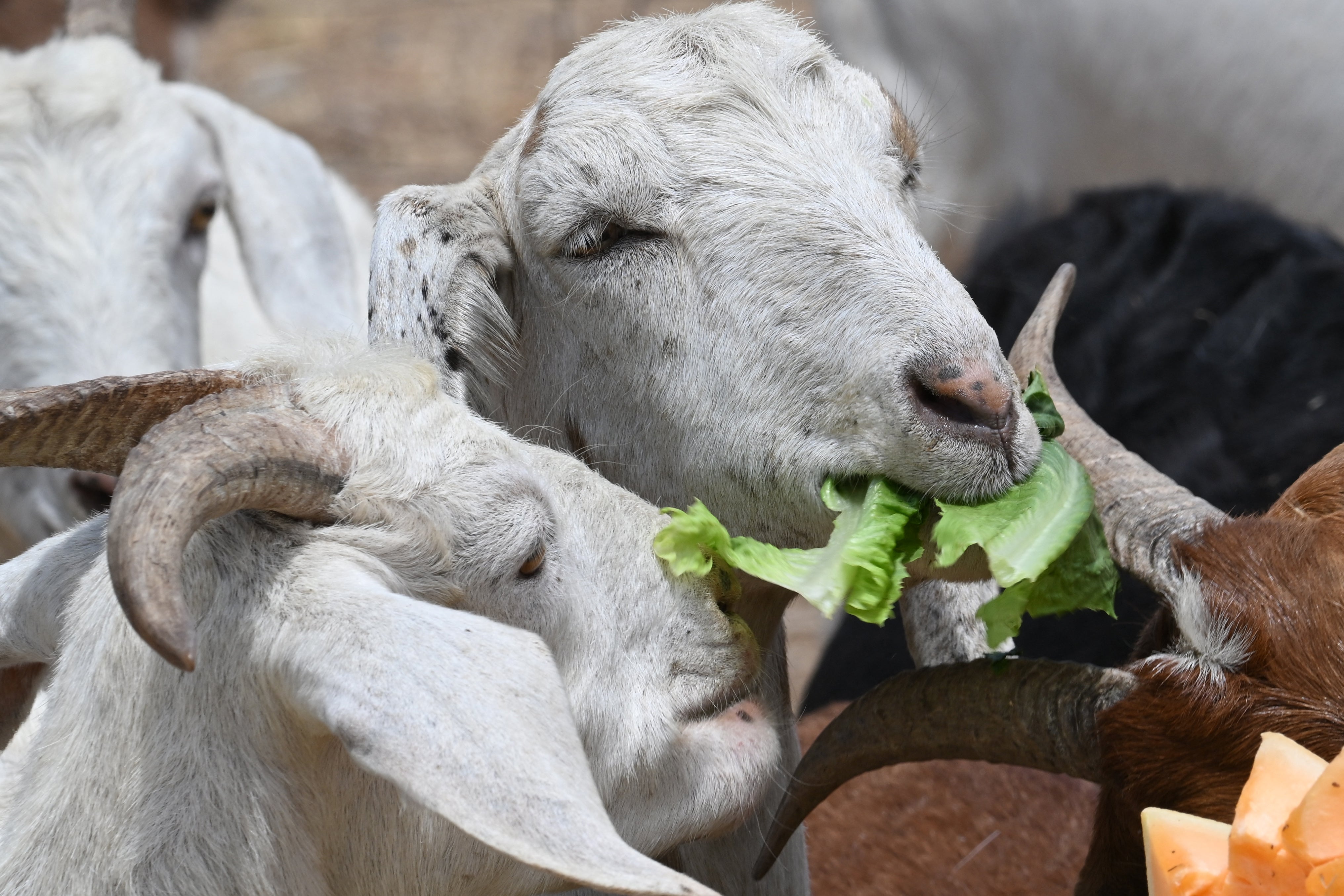
When they spoke away from the bucket or did not say anything at all, the goat performed no better than chance.
Researchers added that the exact roles of domestication and experience with humans in the emergence of this trait were unclear.
It said further insight could be provided by examining the abilities of non-domesticated goats.