

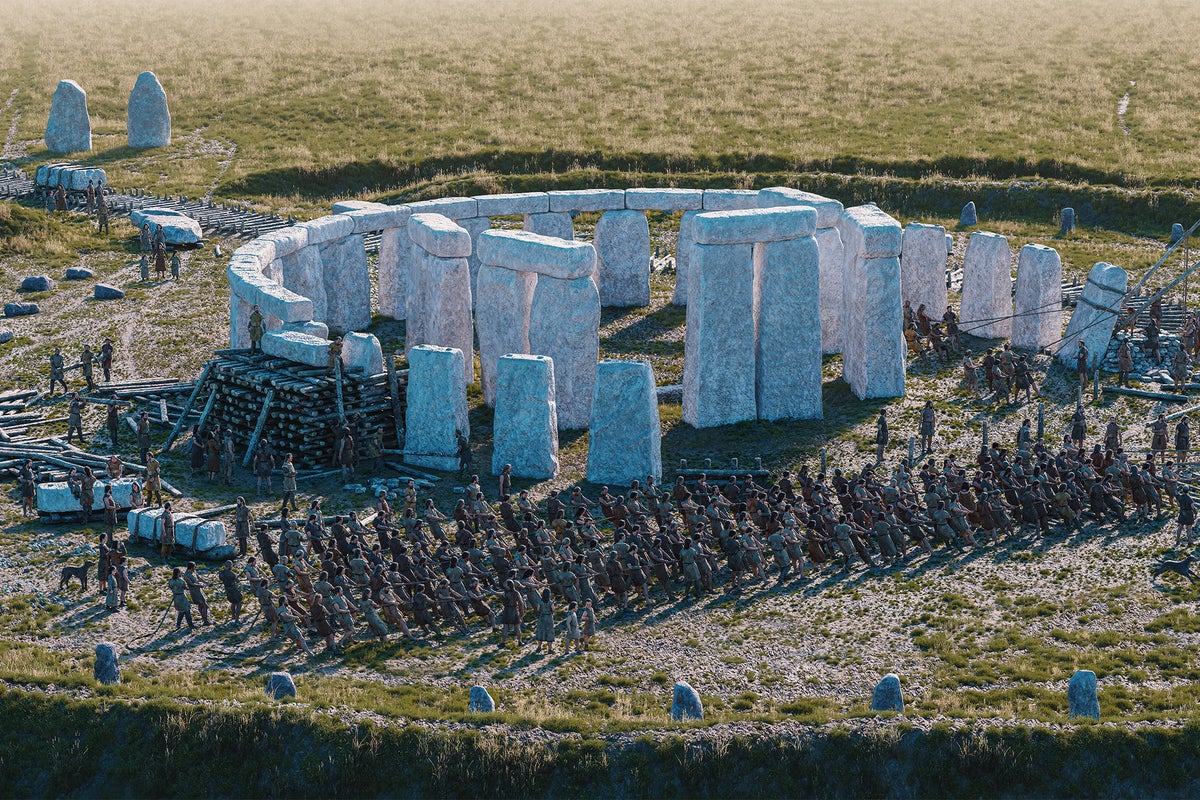
The most realistic image of the building of Stonehenge has been created, revealing for the first time how stones were pulled along wooden tracks “like a sort of railway” to the monument.
The World Heritage Site was built 5,000 years ago, first with the placing of bluestones transported from the Preseli Hills in Wales, and then, hundreds of years later, it was altered with the arrival of huge sarsen stones to create the iconic stone circle.
The 25-tonne sarsen stones were brought from Marlborough Downs, some 15 miles away, and until recently, it was through that they were rolled over timber posts along the distance.
Created from laser-scan data along with archaeological work, the image, made by English Heritage, appears in a new book by Dr Susan Greaney, lecturer in archaeology at the University of Exeter.
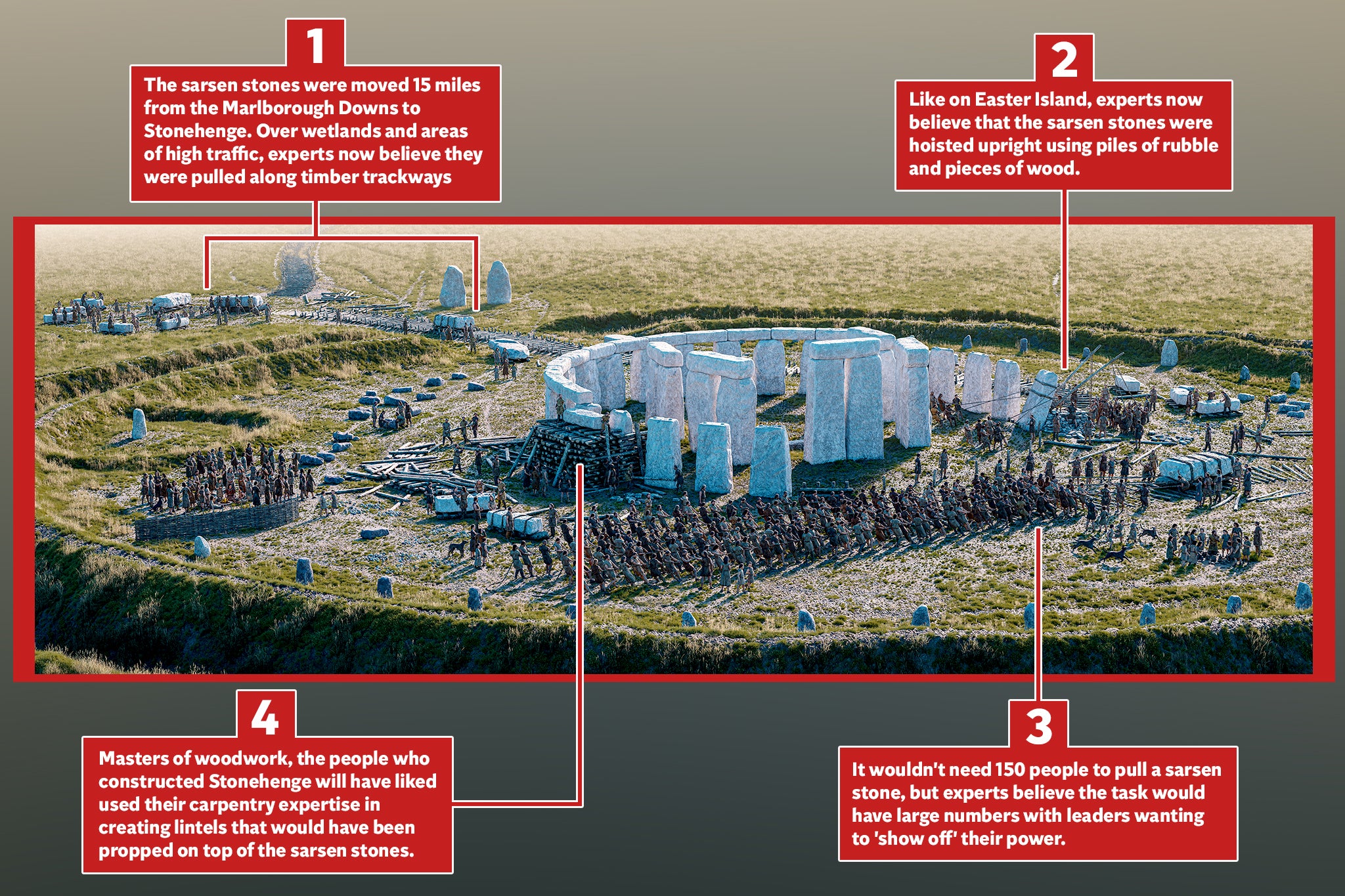
“For years it was accepted that the huge stones were moved using a sledge on rollers, but we now believe that to be a mistake,” said Dr Greaney. “There have been black and white pictures from the 1900s from Indonesia that show the pulling of megaliths along tracks of laid-down wooden timbers, like a sort of railway. And we believe it is likely the builders of Stonehenge used a similar method over wetland and areas of high traffic [of moving the stones].”
The Neolithic people would have been capable to lay down the tracks given their expertise in working with wood, said Dr Greaney, who suggests the tracks might have been up to three miles in length. The new image shows a stone being brought to the site by such a method, as well as a newly-set out theory of how the stones were hoisted up into position.
“On Easter Island it was noticed that the Rapa Nui [local people] used piles of rubble to help pus the stones upright,” said Dr Greaney. “We believe a similar method could have happened at Stonehenge.”
Another feature of the picture is the huge group of men and women pulling the sarcen stone.
Dr Greaney said evidence of mass feasting at Durrington Walls, where it is thought the builders of Stonehenge stayed, highlighted that more people were involved in moving stones and building the monument than were necessarily needed.
Dr Greaney said: “If you go to the other side of the world and show a picture, people will recognise it. There’s an element of mystery to the place too. It was built around 5,000 years ago with basic tools by people we may have thought of as primitive, but really they were sophisticated and much closer to the landscape we live in than people today.”
The image of Stonehenge’s construction is taken from Stonehenge: The Story of an Icon, written by Dr Susan Greaney which is out now.