

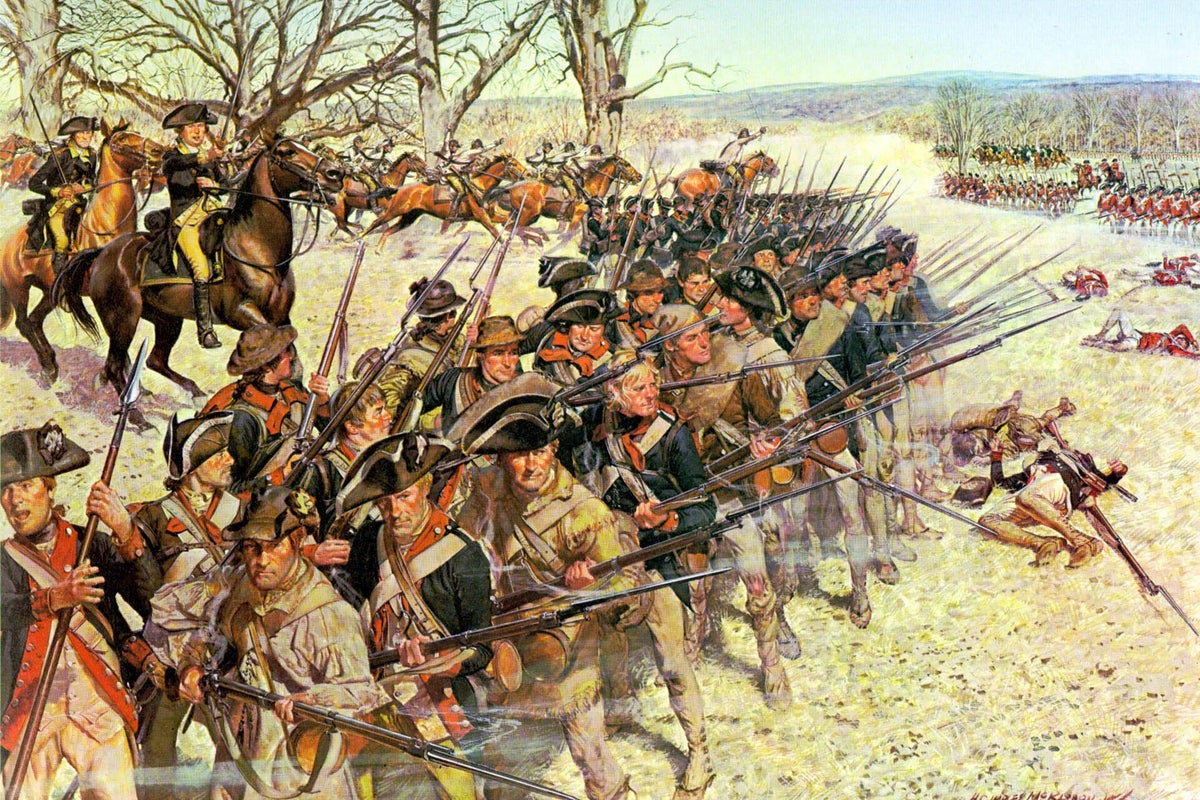
As the world prepares to commemorate this coming Saturday’s 250th anniversary of the American Declaration of Independence, new historical and archaeological evidence and analyses are allowing both academics and the public at large to more fully understand how and why the American War of Independence was even more violent than often popularly believed.
Research over the past few years has shed new light on the massacres, ethnic cleansing and extreme maltreatment of prisoners that occurred during the war.
Although most western European conflicts of the 18th century (such as the Wars of Spanish and Austrian Succession) were on much greater scales, they had much lower atrocity rates.
A book published in 2023 (Memory Wars: Settlers and Natives Remember Washington’s Sullivan Expedition of 1779) reveals the ways in which indigenous and European-originating Americans have, over the years, remembered George Washington’s invasion of the Haudenosaunee [Iroquois] Confederacy, a military campaign now regarded by numerous historians and others as an act of genocide.
And last year, another US academic (Professor Joshua Catalano of Clemson University, South Carolina) published a study of the mass execution of dozens of Native American men, women and children by American pro-independence forces in the Gnadenhutten Massacre of 1782. The new research evaluates how myth-making and cover-ups were weaponised to enable frontier land grabs. And, over recent years, archaeological and ethnographic investigations have shed important new light on the 18th-century village where the massacre took place.
Other research (including two books: Relieve Us of This Burthen: American Prisoners of War in the Revolutionary South [2012] and The American Revolution on Long Island [2017]) has investigated disturbing new evidence about Britain’s treatment of American prisoners of war.
The disease-ridden prison ships in which the British mistreated American prisoners of war and allowed many to starve to death, have been compared to concentration camps by some historians.
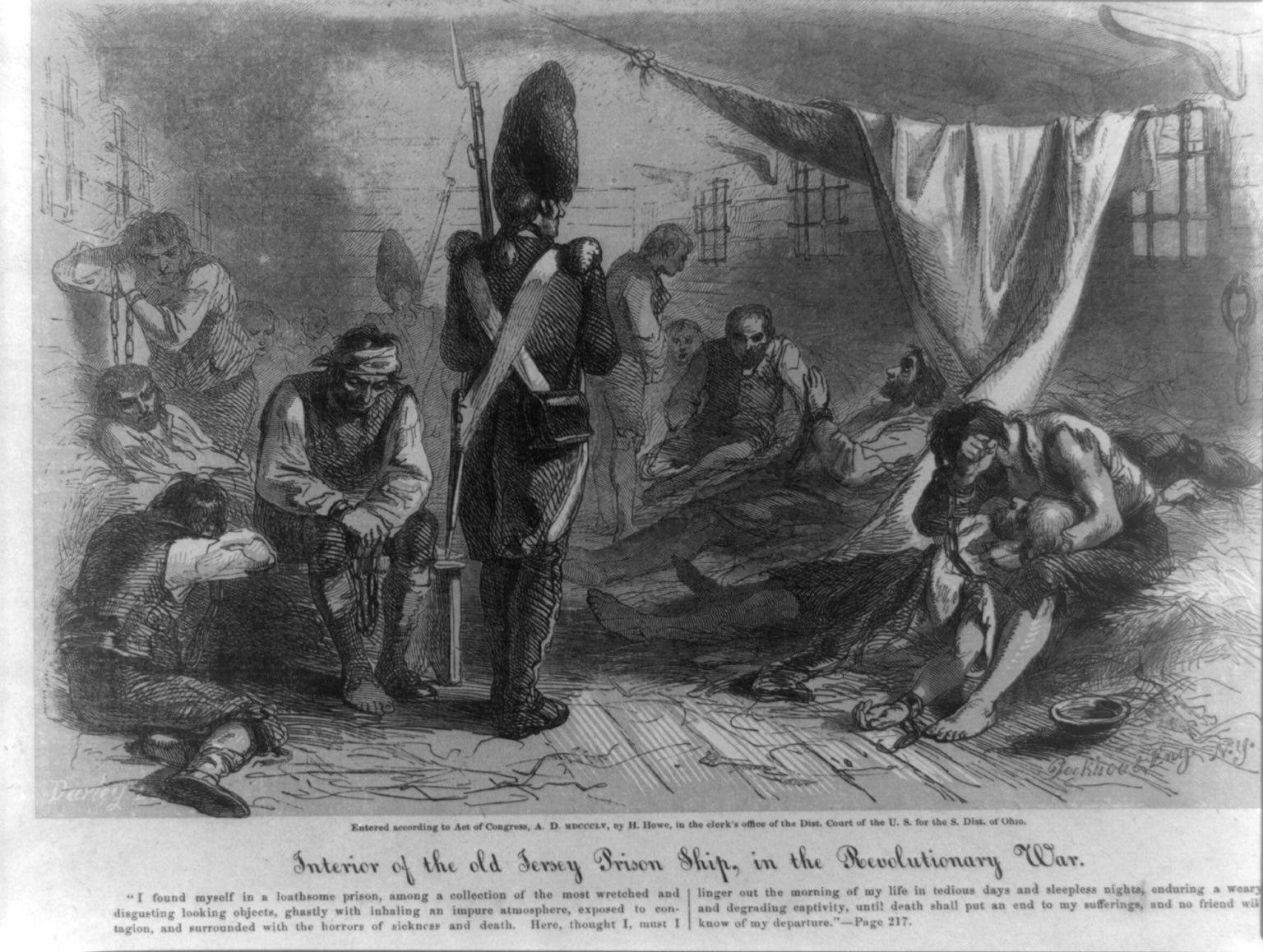
Indeed almost twice as many Americans died in those virtual death camps as in battle.
Around 30,000 African-Americans served in the war (on both sides), but research has revealed that, largely due to shocking racially discriminatory practices, their death rate was roughly four times greater than that of white troops.
And from mid-September, the exhibition will also include the only known ceremonial copy of the Declaration of Independence itself. It is owned by West Sussex Record Office, which will be loaning it to the museum. It will be the first time that the document has ever gone on general public display.
Research by Professor Danielle Allen of Harvard University suggests that it was given as a present by the American revolutionary Thomas Paine to an aristocratic British sympathiser, the Duke of Richmond in late 1787 or early 1788. Professor Allen has just published a book in the US on the subject, entitled Radical Duke (due out in the UK in August).
Significantly, the full-size ceremonial vellum copy of the declaration, due to go on display at the British Museum in mid-September, is actually much better preserved than the original 1776 Declaration in the National Archives Museum in Washington DC. Sadly, the writing on that original is no longer legible – but the one in Britain still is.