

Egypt has unveiled two significant archaeological discoveries, including a well-preserved Byzantine-era residential city in its western desert and a collection of ancient tombs near Alexandria.
These findings are expected to provide invaluable insights into daily life in ancient Egypt while simultaneously bolstering the nation's crucial tourism sector.
The first major discovery, located at the Dakhla Oasis, reveals a thriving fourth-century Byzantine city. This settlement, which existed when Egypt was part of the Byzantine empire, offers a detailed glimpse into urban development and economic activities of the period.
Further excavations at the oasis unearthed bread ovens, kitchens, and stone grinding tools, indicating food production. Researchers also found well-preserved bronze coins bearing portraits of Byzantine emperors, Latin inscriptions, and Christian symbols, alongside a collection of gold coins from the reign of Roman emperor Constantius II (337-361).
Additionally, approximately 200 pottery fragments, known as octraca, were discovered. These fragments contain inscriptions detailing commercial transactions, correspondence, and other aspects of daily life, offering a direct window into the past.
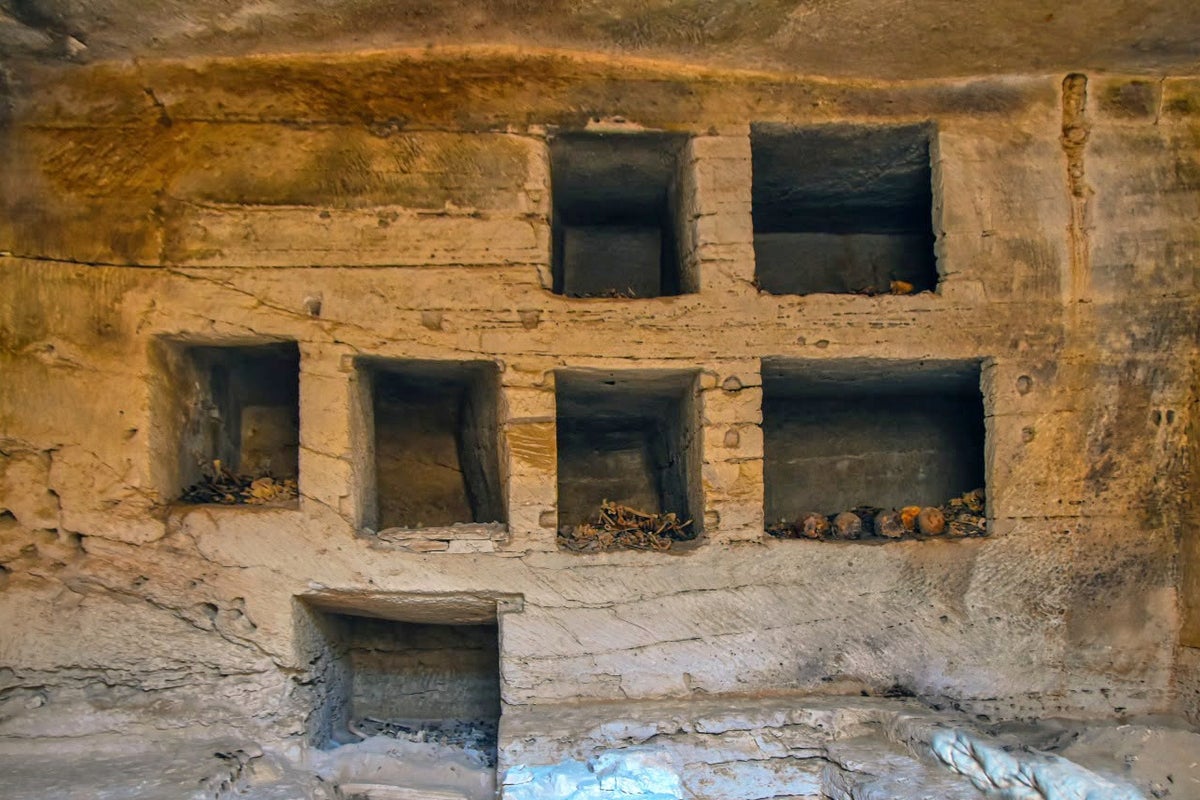
Separately, archaeologists at the Marina el-Alamein site, about 100 kilometres west of Alexandria, have uncovered 18 ancient tombs. This brings the total number of tombs found at the site to 48, comprising 11 rock-cut tombs, some reaching eight metres deep, and seven surface limestone-built tombs.
Artefacts found within these tombs include pottery vessels, amphorae, lamps, plates, altars, and limestone basins. A 2.5-metre-long granite sarcophagus containing skeleton remains is currently under study, and nearby, the remains of a plaster sphinx statue were found.
Known as "the golden tongue," four gold pieces were discovered placed inside the mouths of some deceased individuals, a practice associated with funerary beliefs of that era. The Marina el-Alamein site, unearthed in 1986, is believed to be the ancient Greco-Roman port city of Leukaspis, which flourished from the second to the fourth century.
These discoveries come as Egypt's tourism industry continues its recovery following years of political turmoil, violence, and the coronavirus pandemic.
Official figures show a record 19 million tourists visited Egypt last year, a 21 per cent increase from 2024. The first four months of 2026 saw 6.1 million tourists, compared with 5.7 million during the same period in 2025, underscoring the sector's vital role in the country's economy.