

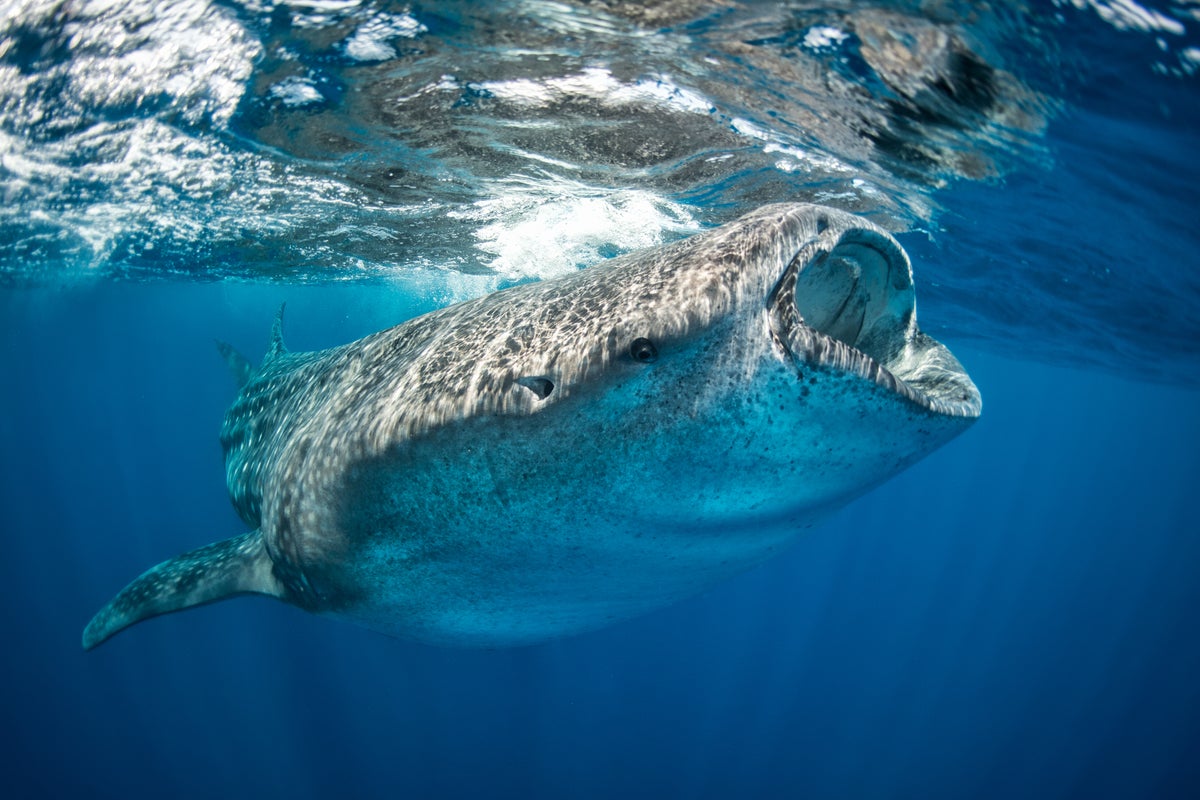
Whale sharks (Rhincodon typus) – the world’s biggest fish – are one of the most charismatic marine species. They connect with the hearts of anyone lucky enough to encounter them, making people deeply curious about their lives and invested in their conservation.
Yet most of what researchers know about the behaviour of whale sharks comes from snorkelling or watching them from boats at the sea surface – only a small part of their entire habitat. Much of their lives below the surface remains a mystery.
Whale sharks live in tropical oceans where food is often sparse and patchily distributed, so they need to constantly adapt. As oceans are affected by climate change, food for whale sharks may become even more scarce, so it’s important to understand their feeding strategies.
Before our study, researchers mainly described whale shark behaviours from watching them in person while at the surface of the ocean.
This would only provide a snapshot of whale sharks’ full lives, and often these observations ended prematurely when the fish decided to dive deep. For example, one description of a possible mating attempt was cut short because the whale sharks dove out of sight of our research team.
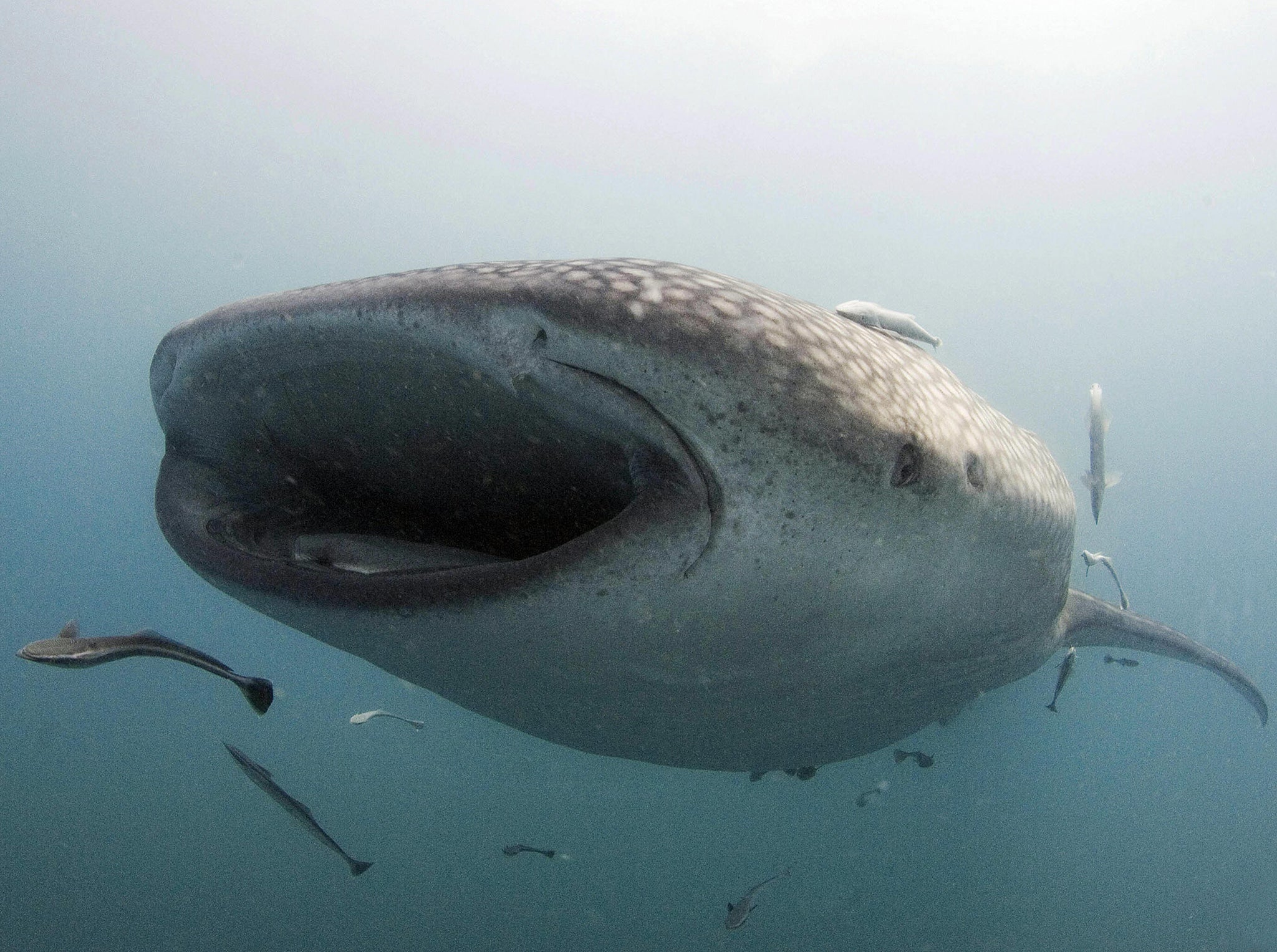
A common method scientists use to investigate animal behaviour in the wild is by attaching electronic tags. These small trackers provide data on movements beyond where we can see them. For marine species, that’s both away from the coast but also when diving beyond the surface.
Although info from tags is incredibly valuable to understand movement patterns, we can’t infer specific behaviours from this data – because we still can’t see the animals.
What do they do when nobody’s watching?
Through our new study, we could finally address the question: “what do whale sharks do when no one is watching?” Filling these research gaps is essential so we can help these majestic, yet endangered filter-feeding animals.
The range of feeding behaviours spanned from effectively sinking to the seafloor with an open mouth (gliding slow feeding), to vigorously swimming after krill swarms – their preferred prey – at the surface (active surface feeding).
The whale sharks in our study spent most of their time performing six low-effort feeding behaviours. This suggests they often snack in water with low prey density until they come across a patch with higher prey density, such as a krill swarm. Then, their behaviour changes to active feeding. It’s like snacking from the pantry while you decide what you’re going to cook for dinner.
We also found that whale sharks have a much wider variety of foraging strategies compared to other filter-feeding megafauna, such as basking sharks and whales. This could help explain how they manage to thrive in tropical waters where prey is limited and patchy.
Our study captured behaviours from just one gathering of juvenile whale sharks near a coast at Ningaloo Reef, Western Australia. If researchers can attach more cameras to whale sharks at aggregation sites around the world, we will hopefully discover new insights and continue to grow our understanding of this iconic species.
Excitingly, we are beginning to understand the secret lives of the biggest fish on Earth, and from what we have seen, they are the ultimate snackers of the sea.