

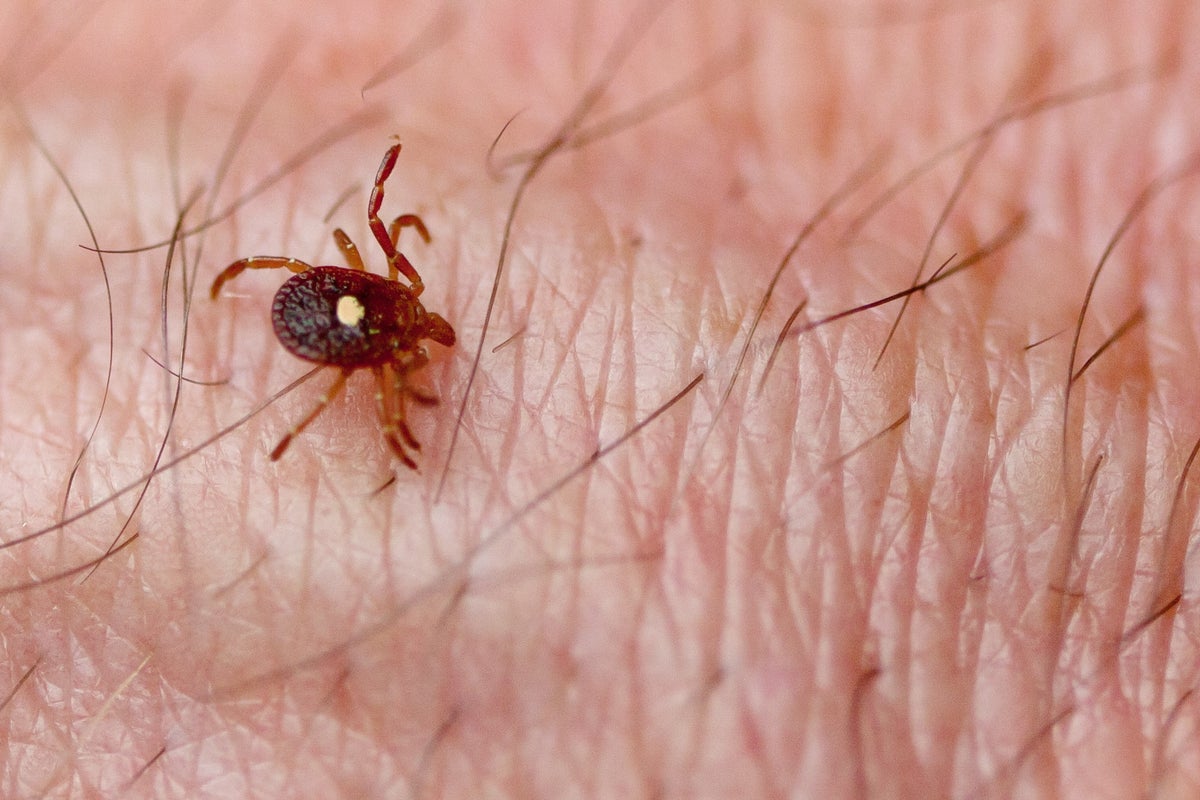
Scientists have issued a warning about the spread of a deadly tickborne illness after finding the first tick infected with it in the state of New York.
The team found a lone star tick carrying Bourbon virus, an illness that can lead to fever, fatigue, vomiting, rash and body aches.
Lone star ticks are common throughout the Northeast, but cases of Bourbon virus are rare.
Cases are often confused for other illnesses the tick can spread, such as the red meat allergy-causing alpha-gal syndrome, experts at Stony Brook Medicine explained in a statement.
With tick populations spreading northward due to warmer and more hospitable conditions, the researchers say more case of Bourbon virus could be coming.
There are no vaccines or medicine to prevent or treat the illness, which was discovered in 2014 and named for the Kansas county where it was discovered.
It’s also hard to diagnose because there is currently test to confirm the viral infection and many doctors aren’t familiar with it.
The researchers determined this case was Bourbon virus after a patient “had shown some very severe symptoms and was hospitalized,” Marcos, who is also a professor at Stony Brook University, said. The patient was initially diagnosed with Lyme disease, but typical treatments for Lyme made no improvements.
Bourbon virus has killed three times: once this year, once in 2017 and once in the patient where the virus was first found.
The deaths were in Missouri and Kansas, but the virus has also been detected in Oklahoma.

It’s unknown where else the virus could be spreading right now, according to the U.S. Centers for Disease Control and Prevention.
That includes more surveillance and developing clinical testing.
“Without identifying the cause of an infection, the chances of developing accurate diagnostic tests or effective treatments are minimal. That is why it is so important to first understand the true impact of the virus in high-risk areas,” Marcos said.