

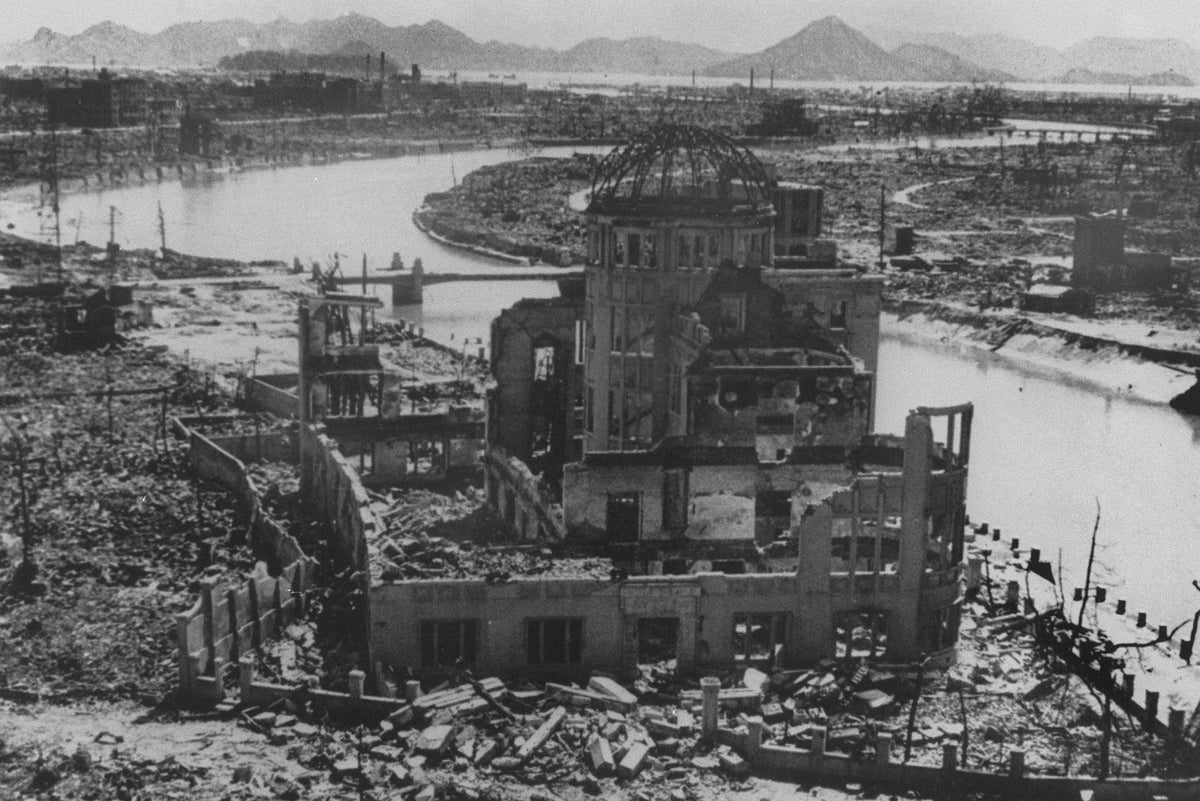
Nearly 81 years after the cataclysmic atomic bombing of Japan that instantly killed over 70,000 people, scientists have discovered a bizarre and previously unknown material from the beach sands of the Hiroshima Bay region.
Nuclear explosions, meteorite impacts, and other high-energy events can act as natural laboratories for the formation of previously unknown materials.
In the study, scientists analysed particles called Hiroshimaites, which are tiny spherical fragments of molten debris formed during the Hiroshima bombing when the atomic explosion generated temperatures exceeding 7,000°C within seconds.
The particles were also examined more deeply with scanning electron microscopy.
Researchers found unique materials formed as the atomic explosion’s heat vaporised building materials, metals, soil, glass, and water, in a turbulent fireball that rose into the atmosphere before rapidly cooling.
Vapours from the burning materials condensed rapidly into microscopic droplets that eventually settled onto the surrounding landscape.
Many of these particles still remain in the sands of Hiroshima Bay after eight decades since the atomic explosion.
Previous research suggested that such particles from atomic explosions were made mainly of calcium-aluminium-silicon glasses that formed at temperatures above roughly 1,800°C.
Now, scientists have found a new class of “Hiroshimaite materials” that form at a much higher human-made high-temperature range.
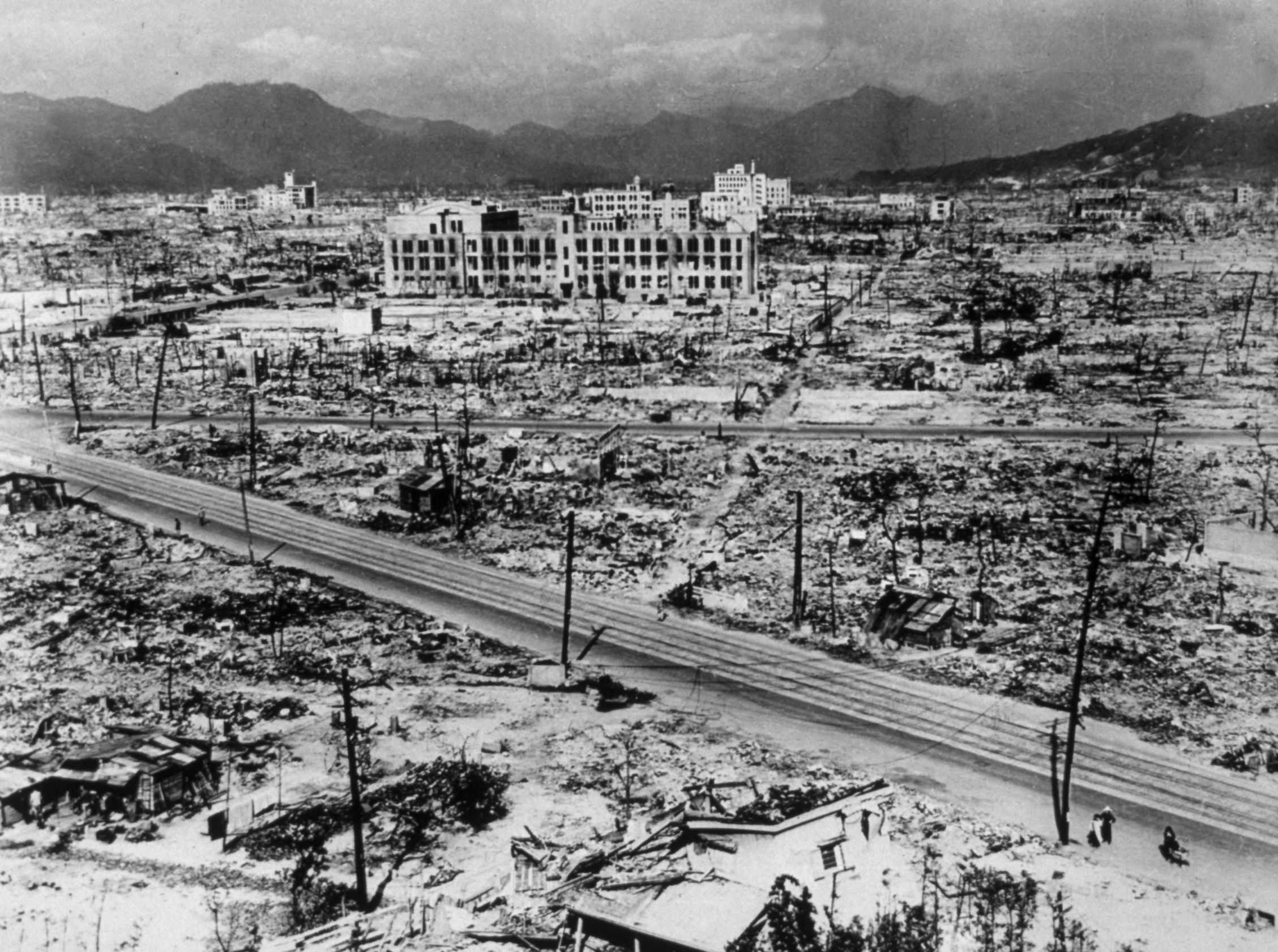
Researchers found that these particles contained small droplets of iron-rich alloys, including iron-chromium alloys with varying amounts of nickel, manganese and molybdenum.
Such uniform crystals are not expected to form under ordinary conditions, they say.
The discovery offers unprecedented insights into how matter behaves under some of the most extreme temperatures and pressures created on Earth, and may lead to new classes of materials under these conditions.