

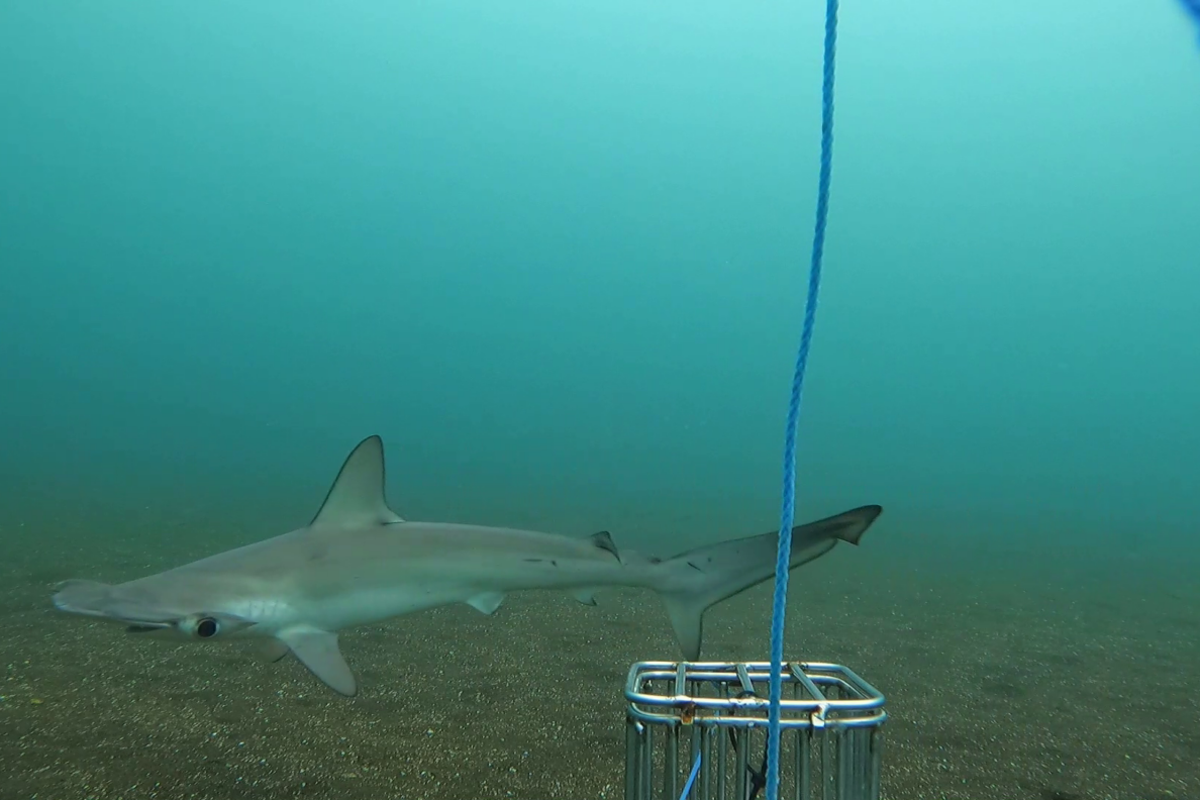
Scientists have spotted one of the Galapagos Islands’ most elusive predators, the smooth hammerhead shark, for the first time in over 20 years.
The latest sighting has indicated there’s much more to find in the archipelago famous for species discoveries.
The findings also shed more light on the ecology and movements of a species that has long gone unnoticed in the islands.
“We know very little about where they feed, where they go or how their populations are doing,” said Ms Antonia, a master's student originally from Ecuador.
Researchers confirmed the species’ identity using genetic analysis.
The waters of the Galapagos Islands are an important nursery area for the sharks – a habitat where their young ones spend the earliest stages of their lives before moving deeper into the oceans, scientists say.
Much about the species remains poorly understood throughout the Eastern Tropical Pacific and globally.
Although the smooth hammerhead sharks appear similar to the scalloped hammerheads, there are subtle differences between the two.
The smooth ones, scientists say, lack the central indentation found on the front of the head of scalloped hammerheads.
Researchers are currently using advanced tools like underwater video systems, genetic analyses and dietary studies to monitor movements of the smooth hammerheads within the Galapagos Marine Reserve.
“We’re comparing DNA from sharks throughout the region to determine whether the Galapagos acts as a bridge between northern and southern populations,” Ms Antonia said.
“We’re also analysing faecal samples to understand what juvenile smooth hammerheads are eating and continuing efforts to study subadult and adult sharks, which have proven much more difficult to capture,” she said.
Scientists hope to better understand the movement of these elusive sharks to help conserve the species better.
They are threatened by overfishing, and even when protected within marine reserves, the sharks may travel through international waters where fishing pressure remains high.
“Many shark species migrate through areas outside protected waters where they become vulnerable to international fishing fleets. We don’t yet know whether smooth hammerheads follow those same routes, but that’s one of the questions we’re trying to answer,” Ms Antonia said.
“If we can identify their nursery areas, migration routes and population connectivity, we can better inform conservation decisions not only in the Galapagos but across the Eastern Tropical Pacific,” she said.