

The first time I saw it, I wasn’t quite sure what I was looking at. A northern white-cheeked gibbon at Shanghai Zoo was holding and caressing a mouse that had wandered into its enclosure. It wasn’t trying to eat it or chase it away. Instead, the gibbon treated the tiny rodent with remarkable gentleness. I couldn’t stop wondering why.
Years later, while studying wild black-and-white snub-nosed monkeys in the mountains of south-west China, I watched playful juveniles repeatedly trying to climb onto the backs of domestic pigs. Again, these weren’t the kinds of interactions I expected to see between different species.
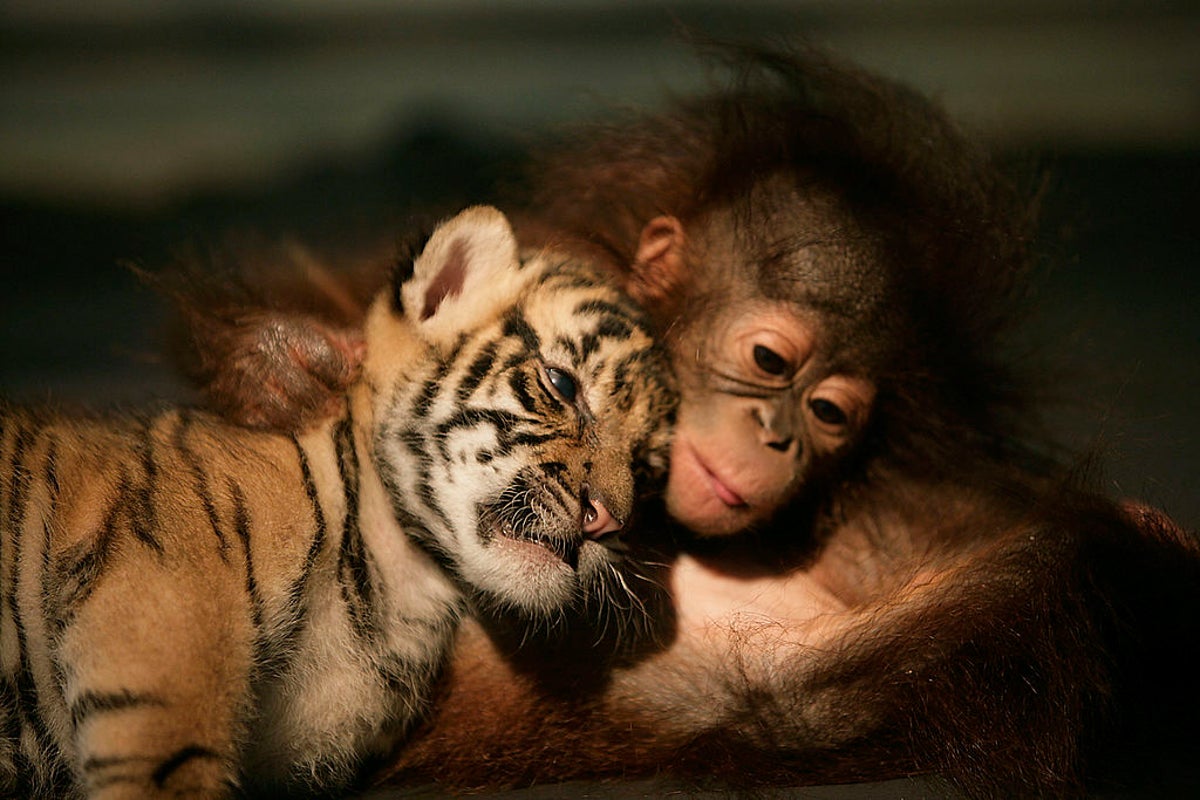
A new study my colleagues and I conducted brings together 427 documented cases of primates interacting with other species, spanning several decades from the 1970s to 2025. Our findings reveal that these encounters are far more widespread than scientists had realised.
I’ve long been interested in how tolerance evolves, not only between members of the same species but also between strangers more generally. Humans are unusual in the degree to which we cooperate with unrelated people. We are perhaps even more unusual in the close relationships we form with other animals.
Scientists have long known that different animal species often associate with one another. Monkeys, for example, can improve their predator detection or increase foraging opportunities when they move around as a mixed-species group. Another example is how birds frequently follow monkeys through forests to feed on insects disturbed by their movements.
But our study focused on social interactions.
The cases we reviewed involved 88 primate species and their interactions with 127 other animal species. The diversity of these species was astonishing. It included mammals such as sheep, tapir, deer, domestic pigs, cats and dogs, as well as owls, lizards, toads and even insects.
The most common behaviour was play and grooming. But we also found reports of primates carrying, huddling and sharing food with and occasionally adopting members of another species. Most interactions were initiated by the primates themselves.
One of my favourite examples is the now well-known case of Japanese macaques grooming and riding on the backs of sika deer. It remains a remarkable example of two very different species repeatedly interacting peacefully over long periods.
The findings may also help improve animal welfare. Zoos increasingly house compatible species together, and understanding which species are more likely to form positive relationships can help managers make better decisions.
Perhaps most interesting of all, our findings suggest that some of the ingredients (curiosity, tolerance, caregiving and play) underlying those relationships may have deep evolutionary roots.