

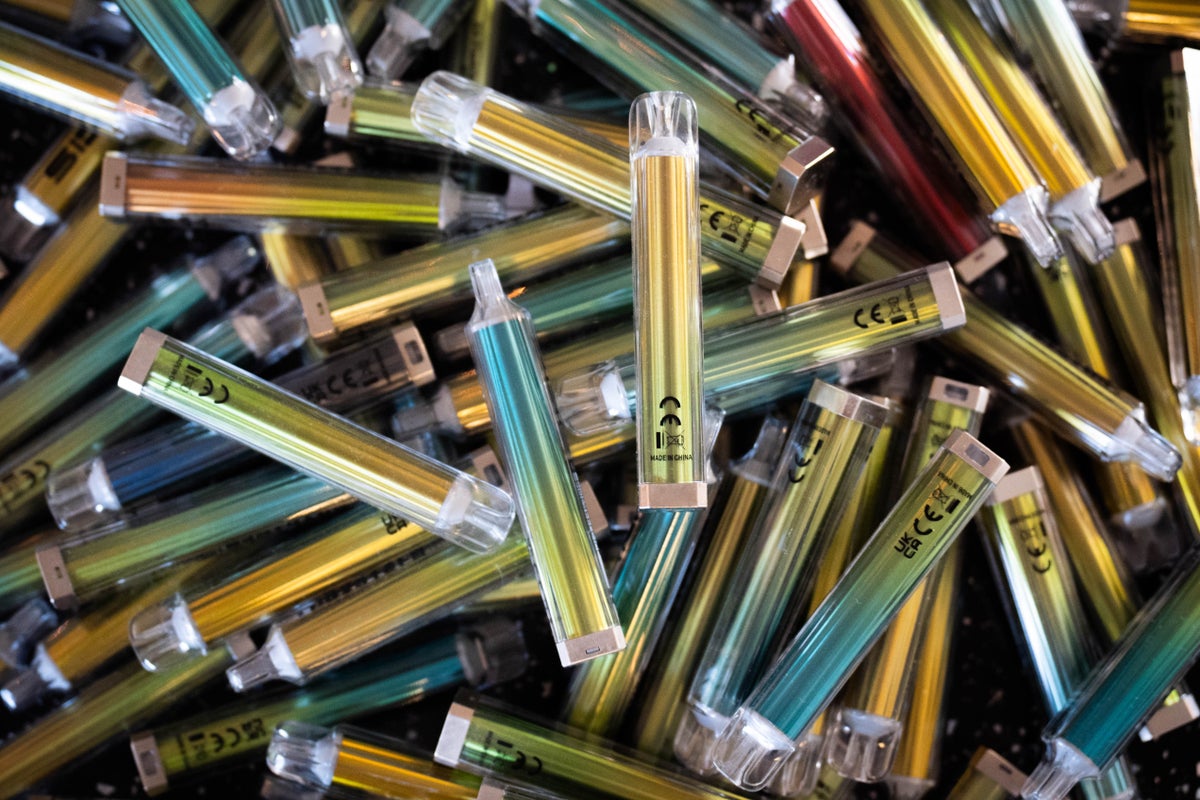
Researchers have urged that expectant mothers receive warnings regarding a "potential harm" associated with a widespread chemical used to give vapes their taste.
Laboratory tests revealed that vanillin, a widely used flavouring additive in e-cigarettes, has the potential to "compromise core processes of early human development".
According to specialists, women attempting to get pregnant as well as those currently expecting ought to be informed of the outcome, while regulatory bodies should evaluate requiring e-cigarette brands to list all ingredients on their packaging.
Prof Talbot and her team subjected the cells to varying amounts of the substance.
They discovered that even minute quantities, described as nanomolar concentrations, caused early-stage cells to lose their capacity to form into all distinct cell types, whereas elevated amounts resulted in cell death.
The authors noted these amounts were "relevant to maternal EC (e-cigarette) exposure".
"These changes are potentially very serious and could prevent normal development of embryos," Prof Talbot noted. "Our data predict that nanomolar concentrations of vanillin may reach the embryo in pregnant women who vape."
Writing in the journal Human Reproduction, the team concluded: "Clinicians should counsel patients who are pregnant or planning pregnancy about this potential harm, and regulatory agencies should consider mandatory ingredient disclosure on EC packaging."
Offering context on the findings, Jacob George, professor of cardiovascular medicine at the University of Dundee, said: "This is a concerning pre-clinical finding that merits attention for future clinical research correlation.
"As this is research done on embryonic cells in a lab, it will need to be further clarified in human clinical trials as laboratory findings do not necessarily always translate into clinically relevant outcomes.
"Having said that, many researchers including myself have been calling for the limiting of flavours in vapes and for further research to be done on the impact of flavourings.
"Many of the effects observed were evident only at levels of the chemical unlikely to reach the developing foetus of a mother who vapes.
"There were, however, some observed effects at levels which may be found in maternal blood, hence the importance of considering information like this in any discussion around vapes in pregnancy."